Monday, December 3, 2018

Debugging pest control recruitment problems

Photo: iStock.com/Courtney Keating

PHOTO: ISTOCK.COM/COURTNEY KEATING

In today’s tight labor markets, pest management companies don’t have the luxury to stick with an old-fashioned playbook for recruiting and retaining employees. The bottom line depends on reducing turnover and finding ways to attract new talent in an economy that’s approaching full employment.

Engagement boosts productivity

Trevor Flannigan

Trevor Flannigan

Happy workers are more productive and work harder for their employers, and that boosts bottom lines. They are also less likely to have one foot out the door and are more engaged with the daily functions of pest control companies and the challenges they face.

Engaged employees are more likely to follow company processes and treat customers well. They wear shoe covers, park the truck appropriately, give customers honest options and upsell services and products. These things only happen when someone is engaged, trained well and passionate about a job and company.

Less engaged employees put in less effort and have contagious, negative attitudes. No one wants to work with unhappy colleagues. If a pest control company wants to grow and retain good people, it needs to cultivate a happy team. Turnover is incredibly expensive. Factoring in the cost of training and onboarding, it takes time to even break even on an employee, before they really start bringing in the profits. A constant churn of replacing unhappy people kills the bottom line.

Hiring well

The heavy lifting of assembling a positive team is to hire well in the first place, but team-building also involves finding time for adequate coaching and ongoing training. Top performers are often motivated by continued growth and advice and lessons handed down by experienced supervisors are appreciated. If a manager doesn’t do regular one-on-ones with direct reports and help them gauge progress, they won’t know what success looks like and the employee-manager relationship quickly starts to fall apart.

One main reason to reduce turnover is the difficulty in finding quality employees in the first place. Pest control companies face the same recruiting challenges as other home service companies. Virtually everyone who needs a job and is employable has a job. The specific skills required of a pest control technician further winnows down the candidate pool.

Recruiting as marketing

Companies and hiring managers need to readjust their focus and start thinking about recruitment the same way they do marketing and sales. Home service companies need to wow prospective employees like they do potential clients, and managers and owners need to dedicate a set amount of time each week to focus solely on recruiting.

Avoid the brush-off. If a technician applies for a job or expresses interest in working for a home service company, managers shouldn’t bury the resume or neglect a return phone call just because it’s a slow season or there are no current openings. There will be job vacancies in the future, and a pest control company needs to have a good candidate pool to choose. Treat job candidates the same way customers are treated. Call them back immediately or respond to their queries even if there are no immediate openings. Empathy is always in order. They will appreciate it and be more willing to return your call in a couple of months.

Recruitment metrics

A good technician can bring in six figures in annual revenue, so it’s well worth it to spend some money on recruiting. Managers or owners, however, need to track what job recruitment platform yields the most bang for the buck. A company needs to gauge return on investment and examine results, just as it would evaluate the effectiveness of an advertising campaign.

This is another way recruiting candidates can be similar to marketing efforts. Managers should take the time to track every recruiting platform they are using — from Facebook to LinkedIn to print, radio and television ads — and pump some money into them. Then calculate the effectiveness of the various platforms by tracking metrics such as cost per acquisition and return on investment.

Don’t botch the final step

Hiring managers must be more intentional with the hiring process, from beginning to end. Companies must portray professionalism, caring and a healthy culture to applicants. They need to sell themselves just as much as the jobseeker.

Some technicians are indeed money-motivated, and higher wages may sweeten the pot. But if a company botches the application process, money becomes less enticing. All the benefits in the world can’t overcome the negative perception that emerges if a company seems unprepared for a visit.

Ultimately, a pest control company’s goal is to maintain a full pipeline of talent and help current employees grow and prosper. Remember, happy employees are best for the bottom line. Respect, empathy, intentionality and a healthy culture can both reduce turnover, keep that pipeline full and keep a company profitable.

The post Debugging pest control recruitment problems appeared first on Pest Management Professional.


from Pest Management Professional https://www.mypmp.net/2018/12/03/debugging-pest-control-recruitment-problems/
Sacramento CA

Research reveals impacts of total solar eclipse on bees

PHOTO: ISTOCK.COM/ARLINDO71

PHOTO: ISTOCK.COM/ARLINDO71

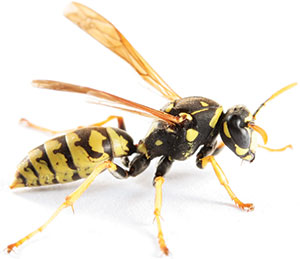
You may remember to total solar eclipse in 2017 in North America that everyone was buzzing about? Well, research from the University of Missouri is reporting that bees stopping buzzing, and all movement, completely during totality.

Candace Galen, Ph.D., professor of biological sciences at the University of Missouri and lead researcher on the study, organized citizen scientists and elementary school classrooms to help set up stations for acoustic monitoring of bees. Sixteen monitoring stations were set up in the path of totality in Oregon, Idaho and Missouri.

Supported by a grant from the American Astronomical Society, the research report states that at all sites but one, “no buzzes were detected during the 3-min window centered on totality.” Bees also demonstrated longer flights during times of partial eclipse flights, responding to the changes in “light intensity.”

The new information confirms that bees have the same response to total darkness — no matter when it happens.

On April 8, 2024, North American will see another solar eclipse. Galen and team plan to improve the audio-analysis software, according to a report from the Entomological Society of America. As the report states, “We bee chasers, including some promising new recruits, will be ready.”

The post Research reveals impacts of total solar eclipse on bees appeared first on Pest Management Professional.


from Pest Management Professional https://www.mypmp.net/2018/12/03/research-reveals-impacts-of-total-solar-eclipse-on-bees/
Sacramento CA

Smith & Sons merges with Modern

LOGO: MODERN EXTERMINATING

LOGO: MODERN EXTERMINATING

Aiken, S.C.-based Smith & Sons Pest Control has merged with Modern Exterminating, Columbia, S.C. It will do business under the Modern Exterminating name.

“We are honored that Mr. Robbie Smith is entrusting us with the care of his customers, and are committed to making sure Modern Exterminating delivers the same level of customer service that Smith & Sons provided, as we also believe in making that our company priority,” says Glenn Matthews, owner and president of Modern Exterminating.

Matthews is the third-generation owner of Modern Exterminating, which was founded by his grandparents in 1955. The 34-employee company recently expanded service into Orangeburg and Sumter, S.C., and Matthews says it is looking forward to the opportunity to serve the Aiken market.

The post Smith & Sons merges with Modern appeared first on Pest Management Professional.


from Pest Management Professional https://www.mypmp.net/2018/12/03/smith-sons-merges-with-modern/
Sacramento CA

ShuBee: Red BeeArmor

PHOTO: SHUBEE

PHOTO: SHUBEE

ShuBee BeeArmor is reusable, stay-in-place surface protection for use on any hard surface — even marble and tile. The non-woven top layer of polymer film prevents dirt, debris, spills or water from seeping onto the surface you’re trying to protect. The underside features a light adhesive, which helps keep the product securely in place. Available in 3-by-100-foot rolls in original blue or new red (pictured), ShuBee BeeArmor is reverse-wound for fast and easy application.

ShuBee.com

The post ShuBee: Red BeeArmor appeared first on Pest Management Professional.


from Pest Management Professional https://www.mypmp.net/2018/12/03/shubee-red-beearmor/
Sacramento CA

RISE encourages PMPs to move ‘boldly forward’

@boldly4ward PHOTO: RISE

With a theme of @boldly4ward, our annual meeting brought together our industry’s leaders in September to review our progress on priority issues and to begin the process of planning for 2019. The theme was an apt one for this year, reflecting that in times of change — including consolidation, trade concerns and a shifting political landscape — our industry must continue to work together and learn from one another. For the pesticide industry, that means going “boldly forward” with our conversation in the social space, telling our story about how the solutions we provide make people’s lives better.

During the meeting, RISE Governing Board Chair Darren Horst, VP, general manager for Central Garden & Pet, parent company of Zoëcon Professional Products; Strategic Oversight Council Co-Chair Karen Larson, VP of regulatory affairs for mosquito product manufacturer Clarke; and RISE President Aaron Hobbs presented the association’s top honors to members making extraordinary contributions to achieving our annual strategic objectives. Jose Milan, global business manager, turf and ornamentals market, for Bayer, was recognized for his 30 years of industry leadership and engagement with our advocacy with the E. Allen James Leadership Award. (Editor’s Note: The award’s namesake, longtime former RISE leader Allen James, is a PMP Hall of Famer.)

In addition, a 14-member work group garnered our 2018 Strategic Driver Award for Advocacy, contributing countless additional volunteer hours to support our mission (see box at right).

ANDNOTOR.ORG UPDATE

We also presented the results of our 2018 ANDnotOR social media program, highlighting consumers’ desire for helpful information about how to maintain their homes and properties. This year’s campaign created more than 20 million impressions and 3 million engagements on Facebook and Twitter.

The most meaningful content to our audience was delivered through short and simple how-to videos that people watched 3.1 million times, with 40 percent watching at least one full video. By a ratio of 5:1, video content outperformed all other content.

VALUABLE TAKEAWAYS

Industry meetings give us many opportunities to learn from one another. That was certainly the case in August, when members of the RISE team attended the annual meeting of the Association of Structural Pest Control Regulatory Officials (ASPCRO). A superb and bold presentation about “microlearning,” made by Adam Vannest from Northwest Pest Control, along with Tim Husen and Glen Ramsey from Rollins Inc., showed how their companies are adapting to how many people are learning and digesting new information today. Part of their focus was on using short videos as part of technician training, to deliver information in small, easy-to-understand digital modules that connect with how their audience wants to learn. These companies are moving from book-based, classroom-style training to digitally based training that can happen in a classroom or family room.

The fall and winter meeting and conference season gives us many opportunities to share what we know, and to hear from the people and companies in our industry making bold moves, like stepping up to take a leadership role and using video to authentically connect with our many audiences. Look for us on the road this conference season: We’ll be talking about bold ways to share the benefits of professional services and pesticides — using peoples’ favorite channels and original content to make an authentic connection.

Recipients of the RISE 2018 Advocacy Strategic Driver Award

  • Patty Flis, FMC Corp.
  • Brad Glenn, Bayer
  • Jill Holihan, FMC Corp.
  • Jenn Hughes, Corteva Agriscience
  • Jon Ostrowski, Clarke
  • Kylli Paavola, Liphatech
  • Norma Pangilinan, SBM Life Science Corp.
  • Tann Schafer, Bayer
  • Julie Schlekau, Valent USA
  • Kristen Shears, Corteva Agriscience
  • Doug Soper, PBI-Gordon Corp.
  • Kerry Sosa, BASF Corp.
  • Katie Swift, Liphatech
  • Carrie Tackema, Nufarm Americas

The post RISE encourages PMPs to move ‘boldly forward’ appeared first on Pest Management Professional.


from Pest Management Professional https://www.mypmp.net/2018/12/03/rise-encourages-pmps-to-move-boldly-forward/
Sacramento CA

Identifying sources of distraction for detector dogs

(Editor’s note: This is part three of a four-part series on detector dogs and distractions. Read part one, “What distractions mean for detector dogs” and part two, “Don’t go to extremes when helping your detector dog with distractions.“)

PHOTO: DAVID LATIMER

PHOTO: DAVID LATIMER

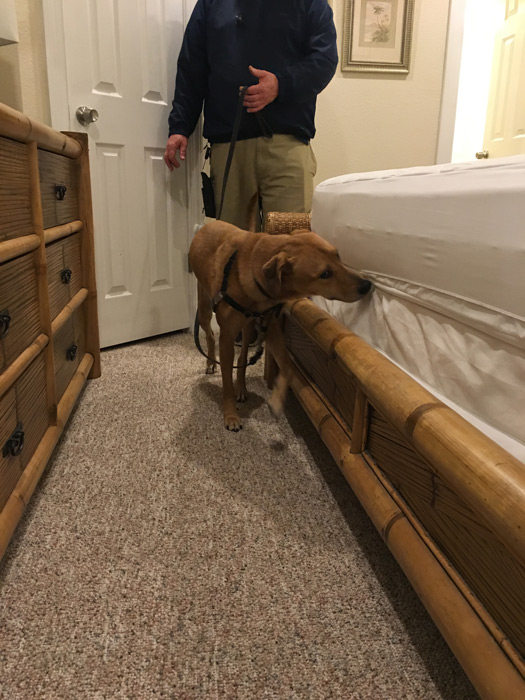
I want to start this segment by relating how I deal with distractions with my dogs. When my dog and I encounter a new environment or situation, I typically let him approach and sniff freely. I let the dog listen, sniff and look closely, pretty much as it wants — if of course it’s safe for him to do so. I simply stand by patiently until he’s had a chance to put this new thing into the category that he is comfortable with. I watch closely to see if the dog’s reaction is one of anxiety or curiosity. If the dog is tentative about the new thing, I may walk up to the thing myself, maybe prop my arm or foot on it to let the dog know that I don’t see it as a threat. Once I see that my dog has had a chance to acclimate, I’ll then take over and tell him it’s time to go to work. I avoid forcing the dog to approach. If the dog wants to move away temporarily, I’ll let him do that until he’s ready.

Before we can deal with a distraction we have to identify what the source of the distraction actually is and determine whether the dog is scared, just curious or just sees the new thing as more important than what you have to offer. Canine body language is the key to being able to accurately determine a dog’s state of mind. I recommend that all handlers (and trainers for that matter) read at least two books; “How to Speak Dog” and “How Dogs Think,” both written by Dr. Stanley Coren. These books are insightful, informative and are based on real research conducted by professional animal behaviorists. These books and the cited research will equip you with the knowledge to recognize the cues your dog sends and will help you learn “How To Speak Dog.”

There are subtle body language signs that you can learn to recognize when the dog shifts from what it deems as a necessary investigative evaluation into curiosity or amusement mode. One such sign is that a male dog may hike his leg and urinate on the new thing. You can be fairly certain that the investigation phase is over when that happens. I’ve had female dogs that do this, too, by the way. There are other signs such as the dog turning away from the new thing, relaxing it’s body posture or opening its mouth and breathing normally. These are signs that the dog has decided that the new thing isn’t a threat or isn’t interesting enough to deserve its undivided attention.

Here are a few common body language signs that a dog is fearful of something new: The head is held high and the ears are erect, one foot is possibly held off the ground. The dog may glance away as if looking for an escape route. This glance is easily discernible as different from the looking away described above in that the dog will not likely open its mouth or lower its ears and the glance will be very quick and may even appear furtive. There are many, many other body language cues that handlers should learn that are contained in Dr. Coren’s books. Becoming familiar with canine body language will make you a better and more professional handler.

Next time, we’ll talk about what to do to get your dog to ignore distractions.

The post Identifying sources of distraction for detector dogs appeared first on Pest Management Professional.


from Pest Management Professional https://www.mypmp.net/2018/11/30/identifying-sources-of-distraction-for-detector-dogs/
Sacramento CA

Saturday, December 1, 2018

6 steps to screening superstars

ILLUSTRATION: ISTOCK.COM/OMELCHENKO ANDRII

ILLUSTRATION: ISTOCK.COM/OMELCHENKO ANDRII

No matter the position you’re looking to fill, your interview and follow-up procedures are key. Here are six steps to ensure success:

1. Thoroughly review the resume, making sure there are no significant lapses in employment. Don’t take the candidate’s word for it — if you find lapses, investigate. Make sure his or her job history is compatible with the position you’re seeking to fill.

2. Before the interview, develop a list of questions. Delve into the candidate’s job history, prior responsibilities, personal interactions with superiors, team members and customers. If you have a difficult time thinking of questions, you can find a list of relevant interview questions online.

3Hire a company to conduct personality screenings on all qualified candidates. The results will give insight into the probability of success in their positions.

4. Conduct thorough background and reference checks on all serious candidates. Also, conduct drug screening prior to employment.

5. Require all candidates sign a non-compete/non-disclosure agreement in the event of termination. Also, put in place a 90-day probationary period.

6. Last but not least, “hire hard.” You may like the person’s personality, but if you find that he or she doesn’t meet your requirements, move on. It will save you problems down the line.

The post 6 steps to screening superstars appeared first on Pest Management Professional.


from Pest Management Professional https://www.mypmp.net/2018/12/01/6-steps-to-screening-superstars/
Sacramento CA