The residential version of this story is simple: A garage door seals against a slab with a rubber gasket; the gasket wears; the mouse comes back. One opening, one wear item.
A loading dock is not one opening. It is four systems stacked on top of one another, built by different trades, maintained by nobody in particular, and the account manager calls the whole assembly “the dock door.” That is why the shipping area is the part of a manufacturing account that never stays clean.
I have been working on residential and commercial doors in coastal Virginia since 2013. Here is what is actually open back there, in the order I would look at it.
1. The pit, not the door
Start with the thing that stays open whether the door is up or down.
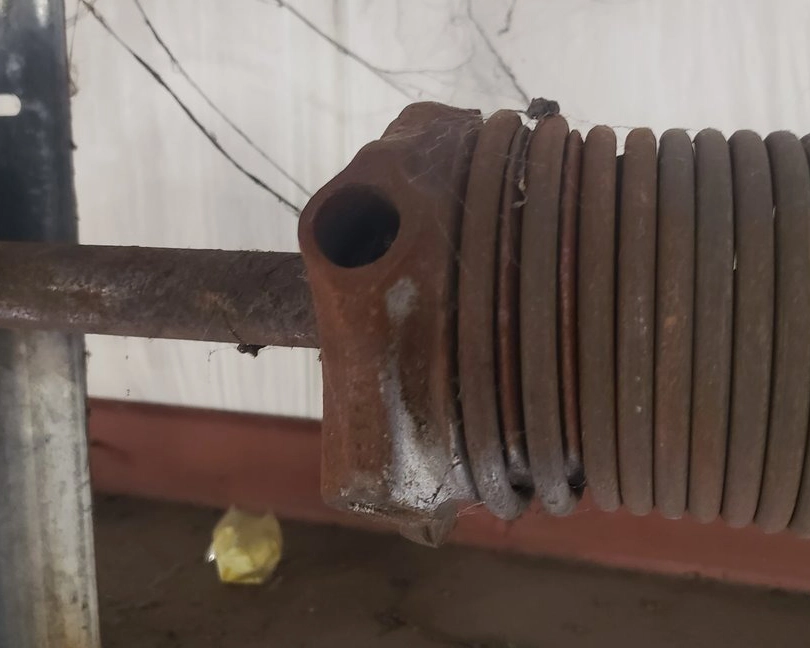
Most docks use a pit-style leveler, which is a steel deck that sits in a formed concrete pit, hinged at the back, with a lip that folds out onto the trailer. The leveler has to move inside that pit, so it cannot be tight against it. The standard result is a gap of roughly 1 inch running down both sides of the leveler and across the rear of the pit, open to outside air at the dock face.
That gap does not care about the overhead door. It is below it and behind it. A facility can shut every door at 6 p.m. and still have three open slots per dock position, plus the chain pull slot, plus the plug holes left from installation, plus whatever gap has opened between the transition plate and the concrete.
A quarter inch is a mouse. Half an inch is a rat. One inch by 3 feet, times four dock positions, is a highway.
Check it with the door down and the leveler stored, from outside, in daylight. You are looking straight into the building. If you can see the inside of the warehouse from the driveway with everything closed, that is your finding, and it outranks anything you will write about the door itself.
2. The corners of the dock seal
The foam pads around the opening are there so a backed-in trailer closes the gap between the truck and the building. They wear in a predictable pattern. The head pad at the top takes the beating; the side pads pull loose at the top corners. And what opens up is a small triangle at each upper corner where the head pad and the side pad no longer meet.
Look at the two top corners, not the middle. That is the same rule as the residential door, for the same reason: Everybody looks at eye level.
If the account runs dock shelters instead of seals, the wear shows in the curtain edges where the trailer body rubs, and in the bottom 6 inches where the tires and the bumpers hit.
3. A rolling steel door is not a weather door
This one surprises people, and it is worth knowing because it changes what you write in your inspection report.
A rolling steel service door is a curtain of interlocking slats riding in two guides, coiled on a barrel above the opening, covered by a sheet metal hood. None of that is a seal. The guide seals, the hood baffle and the rubber astragal on the bottom bar are separate line items that somebody either specified when they bought the door or did not.
On a 15-year-old warehouse door, for example, usually they did not. Even if they had, by now the seals have likely become brittle or were torn off by a forklift, and never came back. So look at three places on a rolling door: down both guides where the curtain meets the track, along the bottom bar, and up at the hood.
The hood is the one that gets missed. It is a cover over the coil, not a closed box, and on a lot of buildings it is the warmest, driest, most undisturbed spot on the exterior wall. Birds find it first. Then it is a nesting site 12 feet up with a direct line into the building.
4. The door that is never closed
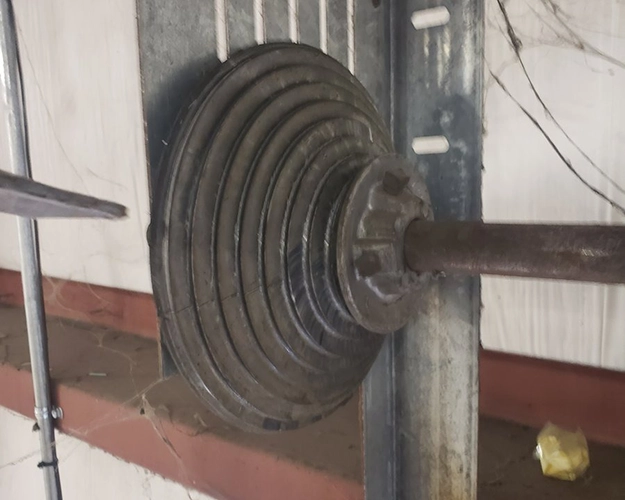
Half of what I get called out for at a warehouse is not a seal problem. It is that the door will not come down, so it stays up all day and everybody stops thinking about it. Two reasons dominate.
- The first is the spring. A standard torsion spring set is usually rated somewhere around 10,000 open and close cycles. A dock door running 30 cycles a day gets there in under a year of plain arithmetic. When it breaks, the door is too heavy to close safely, and the building runs open until somebody schedules the repair.
- The second is a bent bottom section. Forklifts hit doors. Once the bottom panel or the bottom bar is deformed, the door lands crooked or the safety edge reads an obstruction and sends it back up. Nobody calls that a pest issue. It is one for as long as it lasts.
Worn dock bumpers feed this. When the bumpers are ground down, the trailer contacts the building instead of the block, and the first things it crushes are the seal and the door track. Bumper wear shows up as a damaged door, not as a bumper complaint.
What to put in the report
Four lines let a door contractor price the correct work instead of guessing:
1. Pit leveler: gap measured at the sides and rear, with the leveler stored.
2. Dock seal or shelter: condition of the two upper corners.
3. Overhead or rolling door: guides, bottom bar and hood, noted separately.
4. Does the door actually close, and if not, why not.
To accomplish this, do “the dock walk,” which has four stops:
1. Outside, everything closed, leveler stored. Can you see into the building? That is the pit.
2. The two upper corners of the dock seal, where the head pad meets the side pads.
3. The rolling door: both guides, the bottom bar, then look up at the hood.
4. Ask whether the door closes at the end of every shift. If the answer is “it sticks,” that is a spring or a bent bottom section, not a habit.
Why it matters
A warehouse account is a recurring account, and recurring accounts get lost over conditions nobody documented. The dock is the one place where an exclusion recommendation can be completely correct and completely useless, because the opening that got sealed was never the opening they were using.
The dock belongs to three or four trades. Reading it, though, still belongs to pest management professionals.
<p>The post 4 ‘dock door’ openings your commercial accounts think are 1 first appeared on Pest Management Professional.</p>
from Pest Management Professional https://www.mypmp.net/4-dock-door-openings-your-commercial-accounts-think-are-1/
Sacramento CA

No comments:
Post a Comment