
Wednesday, December 1, 2021

Control Solutions Inc.: Precision Delivery System

IMAGE: CONTROL SOLUTIONS INC.

IMAGE: CONTROL SOLUTIONS INC.

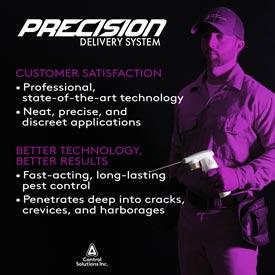
For pest management professionals everywhere, finding the right product to solve common pest problems can be a challenge. CSI has found a solution: the Precision Delivery System (PDS). With a revolutionary design, this handheld micro-duster allows PMPs to deliver precise amounts of dry flowable formulations of Doxem Precise deep into cracks, crevices, and harborages — getting product exactly where it’s needed. With its sleek, state-of-the-art look, the PDS raises the level of professionalism in the pest control industry. Although, in the pest control industry, image is nothing without results! Doxem Precise, powered by indoxacarb, is fast-acting, long-lasting, and has a high efficacy for common pests such as ants, cockroaches, silverfish, stored product pests, and other listed pests. Control Solutions Inc. has a broad range of products for PMPs that are formulated and packaged in a modern production facility in Pasadena, Texas.
.

CSI-PDS.com

The post Control Solutions Inc.: Precision Delivery System appeared first on Pest Management Professional.


from Pest Management Professional https://www.mypmp.net/2021/12/02/control-solutions-inc-precision-delivery-system/
Sacramento CA

Albi, Encircle Announce Integration

“Through our Encircle integration we bring the best of restoration field documentation and project management all in one place. What excites me the most about this partnership is that Encircle is an incredible industry innovator and disruptor, just like us,” said Alex Duta, Albiware CEO.

from Subscribe to R&R Magazine's RSS Feed https://www.randrmagonline.com/articles/89794-albi-encircle-announce-integration
Mold Remediation Baltimore

US Department of Labor Extends Comment Period for COVID-19 Vaccination, Testing Emergency Temporary Standard

The U.S. Department of Labor’s Occupational Safety and Health Administration has extended the comment period for the COVID-19 vaccination and testing emergency temporary standard to Jan. 19, 2022. OSHA extended the comment period by 45 days to allow stakeholders additional time to review the ETS and collect information and data necessary for comment.

from Subscribe to R&R Magazine's RSS Feed https://www.randrmagonline.com/articles/89792-us-department-of-labor-extends-comment-period-for-covid-19-vaccination-testing-emergency-temporary-standard
Mold Remediation Baltimore

Nonresidential Construction Spending Increases Nearly 1% in October, Says ABC

National nonresidential construction spending was up 0.9% in October, according to an Associated Builders and Contractors analysis of data published by the U.S. Census Bureau. On a seasonally adjusted annualized basis, nonresidential spending totaled $814.2 billion for the month.


from Subscribe to R&R Magazine's RSS Feed https://www.randrmagonline.com/articles/89790-nonresidential-construction-spending-increases-nearly-1-in-october-says-abc
Mold Remediation Baltimore

HydraMaster Introduces 'Find A Cargo Van' Website Portal

HydraMaster developed a free portal to help cleaning and restoration companies find the right van for their business. The new resource includes direct links to the nationwide U.S. inventory searches for cargo vans.

from Subscribe to R&R Magazine's RSS Feed https://www.randrmagonline.com/articles/89791-hydramaster-introduces-find-a-cargo-van-website-portal
Mold Remediation Baltimore

2021 Texas Rodent Academy to be held Dec. 14-15

Texas A&M AgriLife photo by Gabe Saldana

Jose Dolagaray of Arrow Exterminators (left) and Larry King of MosquitoNix Pest Control search a drainage pipe for signs of rodent pests during a past Texas Rodent Academy at the Texas A&M AgriLife Research and Extension Center at Dallas. (Photo: Gabe Saldana, Texas A&M AgriLife)

The Texas A&M AgriLife Extension and Research Center will host two educational opportunities in December.

Texas Rodent Academy

The 2021 Texas Rodent Academy hosted by Texas A&M AgriLife Extension Service will take place Dec. 14-15 in Dallas, Texas.

The two-day course is designed for integrated pest management (IPM) professionals and those who handle pest management in their work for municipalities, universities, public schools and food safety personnel.

The cost is $200, and the academy is limited to 50 participants, according to a news release. Tuition for the academy covers course materials and meals.

Registration is now open.

The event will be held at the Texas A&M AgriLife Research and Extension Center.

There will be a certificate of academy completion available for student who pass a final exam as well as Structural Pest Control credits for participants who request them and fulfill the necessary criteria.

“We are so pleased to be able to welcome IPM professionals to this in-person and hands-on rodent management workshop,” said Janet Hurley, AgriLife Extension IPM specialist in Dallas, Texas. “Over the past two years, we’ve seen buildings and businesses closed for periods of time. Combine that with changing behavior patterns and alternate food sources for rats, and we’ve witnessed problems and issues we hadn’t experienced before.”

Hurley said in a news release that the goal of the Texas Rodent Academy is to provide a highly focused and standardized approach to managing rodent populations through IPM. After completing the course, participants will be able to manage rodent populations more efficiently due to an improved understanding of the biology, behavior and habitat of rodents.

Participants will also learn about contributing factors to infestation, effective ways of evaluating site-specific responses and strategies, and effective communication strategies with the public to achieve lasting change and improvements.

“We’re excited to be able to present so many leaders in the IPM field to discuss these issues and the latest technology, studies and solutions related to pest management,” Hurley said in a news release.

In addition to Hurley, urban rodentology speakers will include Niamh Quinn, Ph.D., human-wildlife interactions advisor, South Coast Research and Extension Center, University of California, Irvine; Claudia Riegel, Ph.D., City of New Orleans Mosquito, Termite, Rodent Control Board director; and City of New Orleans Mosquito, Termite, Rodent Control Board member Timmy Madre.

Topics covered at the Texas Rodent Academy include:

  • Health significance of rodents.
  • Rodents and allergens.
  • Biology and behavior of rodents.
  • Overview of IPM.
  • Pesticide labels and federal regulations.
  • Exterior bait boxes – what, where and how?
  • Alternative tools & techniques for rat control.
  • Mouse Integrated pest management in apartment/private homes.
  • Rodent control.

Participants should wear comfortable shoes and dress for being outdoors. Participants will be broken up into smaller groups for outdoor learning, which includes:

  • What to look for at site-specific inspections.
  • Bait station, snap traps, exclusion.

Pests of Concern seminar
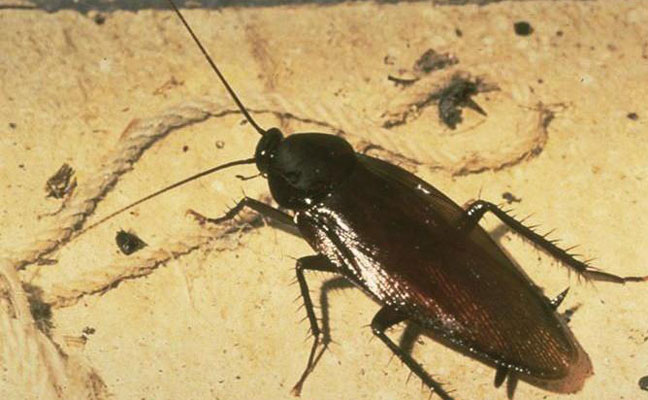
PHOTO: TEXAS A&M AGRILIFE

A training on pests of concern will cover cockroaches and other nuisance insects and rodent on Dec. 16 in Dallas. PHOTO: TEXAS A&M AGRILIFE

The Pests of Concern seminar will cover some of the most common pest problems institutions and foo processing facilities encounter.

The seminar will be on Dec. 16 from 8 a.m. to 5:15 p.m. at the Texas A&M AgriLife Extension and Research Center in Dallas, Texas.

Preregistration is required and is now open.

The cost for the seminar is $50, which includes training materials, refreshment, a continental breakfast and lunch.

Participants will receive six hours of educational instruction and continuing education units (CEUs) for Texas registered sanitarians, code enforcement officers, animal control officers ad Texas Department of Agriculture public health vector control category license holders. While license numbers must be provided to receive CEU, this event is open to anyone wanting to learn more about his topic.

“Many insects, other arthropods and certain rodents can impair the health and quality of life of people living in and visiting Texas,” Hurley said in a news release. “To create effective and safe control programs for these pests, it is important to understand their biology and their roles in causing and transmitting diseases.”

The training is designed for public health officials, code enforcement officers and those who work in and around public places. The integrated pest management, IPM, workshop includes lectures and hands-on activities to help participants better understand rodent, cockroach and fly ecology, and what to look for on public health inspections.

Hurley said in a news release that participants will have a chance to look at insect specimens under microscopes and there will be time to meet with some pest control vendors to see what types of products are available for use and what they should be used for.

The training will cover a wide-range of pest-related topics, which will be presented by leaders in their field. At the conclusion of the speakers, participants will have the opportunity to walk over to the center’s IPM House to learn what to look for in homes and businesses.

A detailed schedule of the training is available online.

The post 2021 Texas Rodent Academy to be held Dec. 14-15 appeared first on Pest Management Professional.


from Pest Management Professional https://www.mypmp.net/2021/12/01/2021-texas-rodent-academy-to-be-held-dec-14-15/
Sacramento CA
Keep your Christmas tree bug free

Photo: Tom Merton/OJO Images/Getty Images

Photo: Tom Merton/OJO Images/Getty Images

One of the most exciting parts about the holiday season is putting up a freshly-cut Christmas tree. Keep your customers aware of the pests that they can find in their tree and how to keep it bug-free as possible so that they don’t stay their home after the holidays.

There are several different types of bugs that could be hiding in your Christmas tree, according to Dr. Chad Gore, an entomologist and market technical director with Ehrlich Pest Control.

Here are some common pests to keep an eye out for while decorating your tree:

  1. Aphids. Similar to ticks but have six legs and are typically a few millimeters in length. They are often black or brown but can also be red or green, and some may also develop wings.
  2. Adelgids. These insects are tiny with a wool-like wax coating that can produce what looks like a light dusting of snow on your tree. The dusting is usually found around the buds, candles or needle bases of the tree. Adelgids can also be yellow or purple.
  3. Pine needle scale. The eggs of these insects look like little white specs on the tree’s needles, similar to flecks of white paint. These infested needles often drop early. If they hatch, small red bugs will appear.
  4. Spiders. These predatory feeders are looking to feast on insects living in the tree, Gore said.
  5. Bark beetles. These bugs are about the size of a grain of rice and have red, brown or black coloring. Bark beetles feed on stressed trees, so it is possible the bugs colonized before the tree was harvested. They prefer moist wood so they won’t pose a threat to structures in your home, like furniture.
  6. Psocids. Little winged insects, also known as bark lice or booklice, like to eat mold or fungi that might be on the tree. The bugs are typically brown or gray in color and die quickly in homes due to low humidity. Despite their name, the bugs are not like typical lice and do not bite or feed on humans.
  7. Praying mantis. In some areas of the country, it is possible for praying mantises to be in the tree, Gore said. Egg cases can be attached to the branches, which are large and brown. In this case, take that part of the branch outdoors to keep it from hatching inside.

Additionally, if there is a bird’s nest in a tree you are interested in, choose another one. Bird’s nest can contain mites and other parasites.

Where to find the bugs in the tree depends on the type of bug.

“Scale insects and aphids are sap-feeding insects that can be found on the trunk, limbs and the woody parts of the tree. This is also where you’ll find bark beetles and psocids,” Gore said.

Adelgid are more likely to be found on the limbs or green parts of the tree and can lay eggs that are white and sac-like with wispy webbing around it. These eggs can be seen easily against the green of the tree limbs. Spiders can appear anywhere in a tree from hiding in the trunk or within the boughs of the tree.

Gore said there is no reason to panic if you find pests in your Christmas tree. Most of them prefer to eat plants, so they won’t create much of an issue. While uncommon, some spiders can bite so it’s best to wear gloves when handling your tree and setting it up inside.

The best way to get rid of any bugs is to vacuum them up and then empty the canister or remove the vacuum cleaner bag. Gore said to empty the vacuum into a larger trash bag, seal it and take it to an outdoor trash can or dumpster.

Gore said not to use an over-the-counter insecticide on or around a Christmas tree since many are flammable, and the heat of Christmas tree lights could be a problem.

To prevent any pest issues overall, shine a light into the truck of the tree at several points while picking it out to look for insects or eggs. Gore recommends giving your tree a “vigorous shake or two” before putting it in the car or house.

To avoid an infestation and prevent concern about pests in your tree all together, it’s best to get an artificial tree.

Do you get an artificial or real tree for Christmas? Have you experienced pest infestations on a tree before? Comment below or send us an email at pmpeditor@northcoastmedia.net.

The post Keep your Christmas tree bug free appeared first on Pest Management Professional.


from Pest Management Professional https://www.mypmp.net/2021/12/01/keep-your-christmas-tree-bug-free/
Sacramento CA