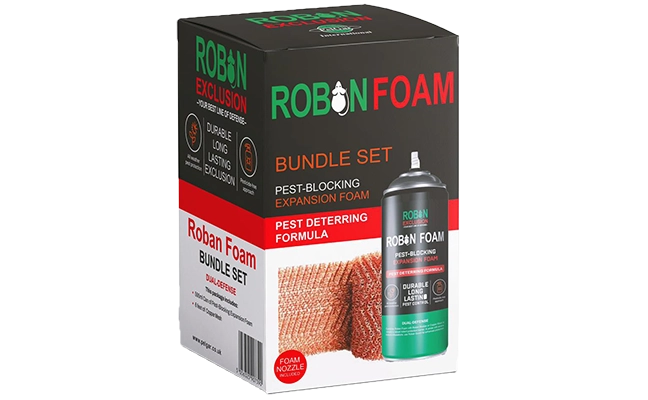
The Roban Foam Bundle Set is an innovative solution designed to protect your residential and commercial accounts from rodents and other pests. The set features a can of Roban Foam and two PelGar Copper Mesh packs of 6 feet each, providing pest-proofing and rodent-blocking capabilities.
The foam fills and seals gaps, cracks and structural openings, while the copper mesh adds a tough, gnaw-resistant barrier that prevents rodents from chewing through treated areas. This integrated approach ensures both immediate sealing and extended durability, making it ideal for foundation gaps, pipe penetrations, utility lines and other high-risk entry points. Designed for pest management professionals, the kit enhances exclusion work by preventing foam damage and improving long-term performance.
Whether you’re dealing with insects, rats or mice, the Roban Foam Bundle Set offers a strong and durable barrier to keep unwanted pests out. Made for larger voids and openings, the foam is not super expanding; it is a neutral color and cures slowly for a dense consistency and strong adhesion.
About PelGar
Based in the United Kingdom, PelGar provides products and expertise in more than 60 countries worldwide, including the United States. The company supports customers who are directly involved in controlling nuisance pests, national campaigns against the vectors of disease, and local and national Conservation in Partnership (CiP) projects. PelGar’s global network of experienced staff and in-country resources guarantee an exceptional level of service.
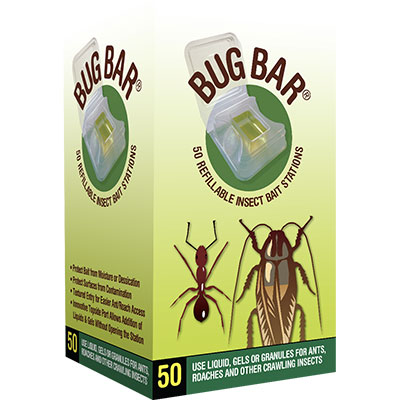
For more than 10 years, pest management professionals (PMPs) have been saving money with Innovative Pest Control Products’ Bug Bars, the company says. These bait stations are a cost-effective method for keeping ant and cockroach baits fresh for longer. Fill the reservoir with the liquid, gel or granular insect bait of your choice to preserve and extend the life and palatability of your bait. Bug Bars’ patented “stepped ramps” design allows for easy access by ants and cockroaches while also being able to close securely to resist pet and child access to baits. Additionally, these bait stations are useful for preventing contamination of surfaces and for preventing pollutants from reaching baits and reducing their effectiveness. Each box of Bug Bars contains 50 refillable insect bait stations. The stations are recommended for use with Innovative Pest Control Products’ Green Way Liquid Ant Killing Bait and Gourmet Ant Bait Gel.
Features include:
The Bug Bar Insect Bait Station is designed to be a sturdy, attractive, thermoformed bait station approximately 2 inches square.
The reservoir holds up to 0.33 ounce of liquid, gel or granular bait.
The entryway is designed to accommodate both ants and cockroaches.
The ribs on the entryway provide a secure foothold for large cockroaches.
The cover easily snaps closed and is difficult for pets or small children to open.
The Bug Bar can be filled or refilled through a fill port on the top of the bait station.
The Bug Bar can be secured in place with double-sided tape or Hercules putty.
Sequoia Quality Solutions and The Pest Posse have jointly launched a new training course: cGMP for Pest Control Teams. This online course is designed to help pest management professionals (PMPs) understand and follow current Good Manufacturing Practices (cGMPs) regarding food safety, defense and security.
Following these rules is not just a suggestion; it is an annual requirement for anyone who provides services to food manufacturing facilities. To stay compliant with federal laws and audit standards, any service technician entering these plants must complete this training every year.
Expert Training by Dominique Sauvage
Industry veteran Dominique Sauvage, ACE, PCQI, president of Sequoia Quality Solutions, wrote and developed the course content. He is a seasoned expert with over 40 years of experience in the pest management field. Throughout his career, he has worked in 17 countries and trained more than 10,000 professionals.
Sauvage’s background includes high-level roles such as senior director of technical services at Terminix. He is a certified HACCP trainer and an expert in Food Safety Standards and Audits. His deep understanding of food defense ensures this course provides top-tier education for the industry.
Why Annual Training is Critical
Food manufacturing plants must follow strict safety rules to stay in business. If a PMP does not follow cGMP rules, the facility could fail an audit or face fines. Taking this course every year ensures that your team remains compliant and well-prepared. This annual training also helps a pest control company become a trusted partner that truly understands the needs of food industry clients.
The course is produced by The Pest Posse and is hosted on the Pest Posse Academy training platform:
Mandatory Update: Meets the annual requirement for servicing food plants.
Certification: Every learner gets a certificate of completion after they finish the course.
Easy Access: The training is available online through the Pest Posse Academy.
Expert Knowledge: Sauvage delivers lessons that focus on real-world needs for food safety and security.
Since 1997, the Professional Pest Management Alliance has strived to “grow awareness of the essential role pest management professionals (PMPs) play in protecting health, food and property, creating market conditions that help businesses of all sizes grow stronger, faster.” In late October, it officially rebranded from the acronym of PPMA to the Alliance. An updated logo also reflects this change.
Since 2004, “professional pest management usage jumped from 18 percent to 42 percent among highincome homeowners, adding nearly 10 million new households to the market. The new brand identity captures this momentum while positioning the organization and the industry as a whole for its next phase of growth,” the organization reported in its rebranding announcement.
“PPMA was our foundation, and the Alliance is our future,” Alliance Chairman Bobby Jenkins, a Pest Management Professional columnist, said in the news release. “We’ve always been a movement that grows stronger with every company that joins, and that certainly hasn’t changed. We wanted to make sure our brand reflects that power of coming together. Because when we work as one, we all grow.”
Movers & Shakers
Norway pest control leader expands to US with acquisition
IMAGE: TYRO GROUP
Elverum, Norway-based Tyro Group acquired EnviroSMART Multifamily Pest Solutions, based in Houston, Texas, and founded by John Weigel in 2009. This is Tyro Group’s first acquisition outside of Europe; it has an established presence in Norway, Germany and the United Kingdom. The partnership will enable EnviroSMART to leverage Tyro Group’s network-wide support, operational expertise and investment capabilities. The Aust Group acted as the exclusive advisor to EnviroSMART on the transaction.
Other news:
Charlotte, N.C.-based Aruza Pest Control appointed five new branch managers: Doug DeVincentis, Smithfield, N.C.; Scott Dunsworth, Dallas, Texas; Michael Haas, Orlando, Fla.; Edward Lannigan, Houston, Texas; and Hasaan McIntyre, Charlotte.
Dr. Katie Stevens joins Liberty, Mo.-based Douglas Products as a field scientist.
Mergers, acquisitions and expansions
Whitmore buys Denver firm
IMAGE: WHITMORE PEST AND WILDLIFE
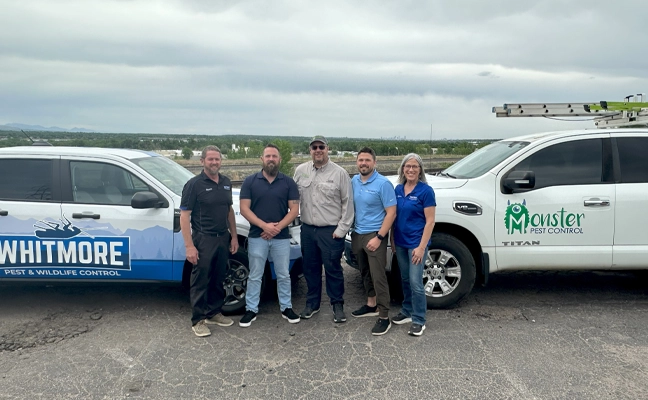
Denver, Colo.-based Whitmore Pest and Wildlife Control purchased local company Monster Pest Control. Paul Giannamore and Franco Villanueva-Meyer of the Potomac Co. acted as exclusive financial advisors to Monster Pest Control. Pictured from left are Marvin Christner, Whitmore director of training and development, Whitmore VP Wilson Christner, former Monster owner Matt Wolf, Whitmore President and CEO Richard Christner and Sylvia Christner, Whitmore director of employee relations.
Clarke acquires 2 product lines
St. Charles, Ill.-based Clarke, a provider of vector management solutions for public health, acquired Becker Microbial Products and the AquaBac larvicide line, which includes ownership of its proprietary Bacillus thuringiensis subspecies israelensis (Bti) strain.
This is Clarke’s largest acquisition in its nearly 80-year history. The acquisition diversifies its larvicide portfolio, which includes spinosadbased Natular. Like Natular, AquaBac is environmentally friendly with a record of efficacy, including in sensitive habitats. Both larvicides feature formulations that are listed by the Organic Materials Review Institute (OMRI) for use in and around organic areas.
AXN Growth Partners made its ninth Arizona partnership in less than 16 months through a strategic alliance with All Clear Pest Control. Tony and Leah Gumm, brand presidents of Affordable Pest Control, will oversee the integration of All Clear’s customers and team into the AXN platform.
from Pest Management Professional https://www.mypmp.net/a-new-alliance-and-a-growing-industry-rebrands-acquisitions-and-key-appointments-signal-momentum/ Sacramento CA
2025 was a year full of industry growth, steered by major acquisitions, hiring and industry events centered around building the industry loved by all within it.
The writers, contributors and team at PMP magazine could not be more grateful for another successful year alongside the pest management industry. To cap off the year, we have compiled our most-viewed pieces of 2025 to reflect on the major events of the year. Enjoy!
Getty Images: mirsad sarajlic / iStock / Getty Images Plus
Each year, the pest-management industry pauses to honor the colleagues, mentors and innovators who have passed on. Individuals whose leadership, technical expertise and dedication shaped the industry we know today. Their contributions remain through the companies they built, the people they trained and the standards they helped define.
The National Pest Management Association (NPMA) released the Public Health Pest Index, its bi-annual pest forecast to raise awareness about the health threats pests pose nationwide. The report identified U.S. cities that were most at risk for experiencing a surge in disease-spreading pests throughout the winter and into spring.
Rockwell Labs Ltd and ConidioTec announce the acquisition by Rockwell of the patented Aprehend biopesticide for bed bugs and associated spray application products.
Hantavirus is an often fatal illness that humans can contract through contact with — especially inhaling airborne particles of — the droppings, urine or saliva in infected deer mice (Peromyscus maniculatus).
The Impact Awards, sponsored by FieldRoutes, honor and celebrate exceptional women at all levels within the pest management industry, in any role, including management, technical service, sales or office staff.
The results revealed a notable surge in bed bug activity, with cities across Ohio, Texas, Florida, California and Pennsylvania dominating the list, suggesting regional trends in infestations likely tied to climate, housing trends and travel hubs.
As we look toward the horizon of a new year, the pest management industry remains a landscape of diverse goals and evolving strategies. Whether the focus is on global humanitarian efforts, local business efficiency or the integration of emerging technologies, every leader has a different “North Star” guiding their professional efforts.
PMP asked six industry veterans and experts to share their primary work priorities as they prepare for the challenges and opportunities of 2026.
Key takeaways
Operational refinement: Leaders are looking to simplify internal processes and cut services that no longer fit their business models to reduce staff stress.
Technological integration: Exploring the practical applications of Artificial Intelligence (AI) and expanding online training platforms are high on the digital agenda.
Growth and people: Maintaining a dual focus on expansion into new markets while prioritizing employee care and community giving remains a core pillar for established firms.
For some leaders, 2026 is defined by a commitment to education and humanitarianism on a massive scale.
Dan Baldwin: “I want to solve the food insecurity problem for smallholder farmers in sub-Saharan Africa.”
Dr. Faith Oi: “I plan to provide programs to as many pest management professionals as possible, update pest identification guides, and offer more Pest Management University (PMU) online!”
Scaling sales and market expansion
Maintaining momentum requires a balance between entering new territories and reinforcing the foundation of the company — the people.
Jerry Schappert: “I want to slow down on active field work and concentrate on sales and tightening up the business.”
Eric Scherzinger: “We will continue to keep our focus on growing our company, especially in our expansion markets — as well as to continue to take care of our people and give back to the community.”
Refining the business model for efficiency
Efficiency isn’t just about the bottom line; it’s about the mental health of the workforce. These leaders are looking to simplify their operations to create a more sustainable work environment.
Doug Foster: “We are revisiting and simplifying processes in the office and in the field. That means we’re cutting services that don’t fit our business model or that we’re simply not great at. We’re also taking a second look at some unprofitable and difficult customers. We want to make life simpler and less stressful for staff and technicians.”
Mark Sheperdigian: “We want to improve our ability to change. This means recognizing where we should change, choosing the correct new direction, and implementing change so it is systemic and permanent without ruffling our workforce.”
Preparing for the spring hiring rush
Growth requires more than just more bodies in trucks; it requires a structured approach to culture and staffing needs.
Pete Schopen: “I plan to help my pest control firm clients prepare for spring hiring. Do they have written core values in place to set expectations for their new hires? Do they have interview questions ready? Have they even gauged whether they have enough recurring work to justify hiring a new employee? What is their biggest need: technician, office staff or both?”
The digital frontier: AI and efficiency
As technology moves faster than ever, PMPs are looking for ways to stay ahead of the curve through automation and quick access to data.
Desiree Straubinger: “I want to continue investigating the ways artificial intelligence can support my role, enabling me to complete tasks more efficiently and access information quickly.”
Pest management professionals (PMPs) know how crucial bait rotation is in their management programs to avoid aversion. Vendetta 360 is a rotational bait specifically designed for use with Vendetta, Vendetta Plus, and Vendetta Nitro Cockroach Gel Baits, as well as other cockroach baits. The innovative bait matrix changes cockroaches’ cuisine to help prevent them from becoming picky eaters.
The Vendetta family offers four baits, each with an exclusive formulation to address different infestation levels for consistent performance that works around the clock. Whether you’re dealing with a minor or severe infestation, the heat-stable Vendetta family has you covered. With highly attractive and effective matrices that provide multiple modes of action with the inclusion of NyGuard Insect Growth Regulator (IGR), you can trust the Vendetta family to provide solid solutions for your cockroach management program:
Vendetta for light infestations
Vendetta Plus for medium infestations
Vendetta Nitro for heavy infestations
Vendetta 360 for rotation
Advance your cockroach defense system with Vendetta 360. This latest addition to the Vendetta family optimizes clothianidin performance, killing cockroaches where they hide. The easy-to-use and durable formula also features NyGuard IGR — providing you with dual modes of action across your rotational plan when you choose from the Vendetta line.
About MGK
In 1902, Alexander McLaughlin went into the business of importing ground spices, plant leaves, barks, fruits and flowers for use in pharmaceuticals and food. Six years later, he incorporated the business with partners George King and John Gormley. The company, McLaughlin Gormley King (MGK), soon realized its product shipments containing flowers in the chrysanthemum family of plants were never infested with live insects.
Four generations of family leadership have guided MGK since its founding. In 1989, MGK became an affiliate of Sumitomo Chemical Co., a critical relationship to its long-term successes in chemistry, technology, sales and growth. As the MGK team notes, “advanced pest control methods that minimize environmental impact while meeting control requirements hold great promise for the future. And that is where MGK plans to be — at the forefront.”
Two words define start-up companies: overwhelming and exciting. As I continue to work with small- to medium-sized pest control businesses, the strained looks on the owners’ faces remind me of how I used to be exhausted but thrilled during the meteoric growth of Schopen Pest Solutions.
In the summer of 2012, I was tired. I had hired a couple of techs, but I was still running an $18,000 route (equivalent to $25,000 today), answering all the sales calls, doing all the billing and working 58 days straight, including Sundays.
To make matters worse, I made a sad phone call to Pest Management Professional’s (PMP’s) Publisher Marty Whitford that April, explaining to him that, after six great years, I was too busy to continue writing “Start-Up Diaries.”
Key takeaways
Define your vision: Rapid growth can lead you all over the place; you must establish a clear vision and direction to manage the chaos.
Structure your time and team: Implement structured weekly meetings and designate specific office hours to put Standard Operating Procedures (SOPs) on paper and stay organized.
Focus on the customer base: Upselling to current clients and consistently communicating with them are quick, proven ways to hit revenue goals and gain confidence.
Consolidate for stress relief: Prioritize steady, manageable, local growth and route consolidation to reduce stress for yourself and your technicians.
My lowest point: From needing work to burnout
On a particularly hot day toward the end of June, I was battling through a 20-client route when I got stopped by a long train in Delavan, Wis.
“Great!” I yelled, slamming my fist into the steering wheel. “Now I’m going to be late to all of my clients!”
Sitting there, staring at the 24 voicemails on my phone as the train cars passed by, I had one of the worst cases of anxiety wash over me. I remember praying, “God, I appreciate all the work you’re sending my way, but could you please give me a chance to catch my breath?”
As I sat there, defeated and on the verge of tears, Marty called me. “Hey Pete!” he chirped. “Our readers really miss you. Would you reconsider and write for us again?” I looked up to heaven, sighed, nodded my head and said, “OK, God, I got this.” I then told Marty, “Yes!” An idea for an article had just popped into my head.
Paying it forward: Turning chaos into a system
It is such an odd situation when we go from desperately needing work to shutting off our phones at night to slow the onslaught of calls and emails. Most of the companies I coached for this year’s column are in that all-too-familiar place.
For instance, Matt Alexander of Blanchard, Okla.-based Arrow Pest Management has gone from zero to $500,000 in less than two years! “The things that Pete helped me with the most this year were vision and direction, because growing a new company from scratch can lead you all over the place, trying to figure out what to do,” he reports.
Daniel Nabors’ Quality Pest Control also had a banner year in 2025. The Lufkin, Texas-based firm grew by over $75,000, finishing above a record $1 million. Nabors contributes many things to his 18 percent growth, including structured weekly meetings, entomology classes, putting standard operating procedures (SOPs) on paper and focusing on company culture.
The growth pillars: Lessons from start-up success
These coaching successes highlight the specific systems and strategies that turn rapid growth into manageable, profitable success.
Focus on internal structure and organization
Portland, Ore.-based Buggin’ Out Pest grew from $275,000 last year to $375,000 in 2025. Owner Travis Kjemperud credits both implementing wildlife control and networking. So has designating office hours. “Pete knew I needed to spend some time in the office,” he says, “so devoting time to office work has helped me stay organized.”
Joel Amores of Apache Pest Control in Weston, Fla., jumped from $390,000 in 2024 to $435,000 in 2025. One of the things we worked on was hosting more productive meetings with his employees. “Pete helped us implement a monthly ‘quick’ meeting to go over routes, procedural problems, solutions to the problems and pest biology,” he explains.
Waxahachie, Texas-based Sandhoff Services implemented a new accounts receivable program this fall. This winter, Cody Sandhoff is working on SOPs and training to take his business to the next level. By the end of December, Sandhoff Services should be up 20 percent from last year and finish near $469,000.
Leverage existing clients and communication
Upselling to his current clients is something that Brian Zahringer at BugBoss in Clintonville, Wis., has worked hard on this year. His goal for 2025 was $230,000—and he hit that before Halloween! At my urging, he will also have better hiring processes, SOPs and benefits for his new employees in 2026.
Augie and Katelyn Gamelli of Gamelli’s Pest Solutions in Shelburne Falls, Mass., climbed from $215,000 in 2024 to nearly $280,000 in 2025! Another improvement has been communicating with clients. As Augie notes, “Pete has really helped us gain confidence through role-playing, scripts and training.”
Prioritize manageable, steady growth
Elliott Hahn of Bigfoot Pest Management is cooler than Fonzie on a Saturday night. His Olympia, Wash.-based firm grew by over $70,000 in 2025. He credits it to being consistent, saying, “Steady, manageable, local growth helped us consolidate our routes, reducing stress.”
More than 13 years ago, Marty convinced me to continue my pest control journey in the pages of PMP. I’m very proud of the men and women who allowed us to watch them grow this year in “Start-Up Stories.” Good luck to them and to all of you in 2026!
Schopen is founder of Schopen Pest Solutions and RV There Yet Pest Consulting, Bartlesville, Okla.
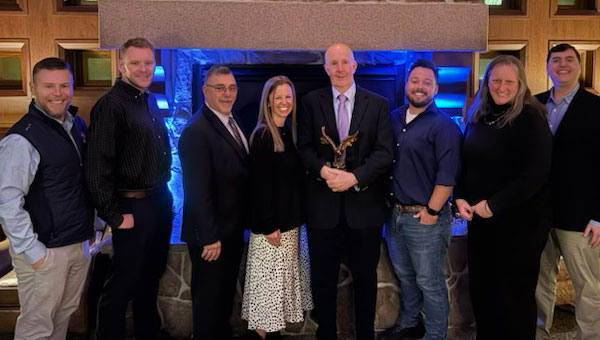
Pictured from left are Nick Aust, Dan Aust, Erich Grove, Stuart Aust and Chris Aust. PHOTO: THE AUST GROUP
Eco-Care Pest Management has been acquired by American Pest, an Anticimex Company. The transaction, facilitated by The Aust Group, officially closed on Nov. 3, 2025. Financial terms were not disclosed.
Founded in 1996 by Erich Grove, BCE, and his brother Jon, Eco-Care is a full-service residential and commercial pest and termite control business based in Ellicott City, Md. Grove, who is one of only eight Board-Certified Entomologists in Maryland specializing in Urban/Industrial Entomology, assumed full ownership of the company in 2014.
The company is an active member of both the National Pest Management Association (NPMA) and the Maryland State Pest Control Association (MSPCA).
“The Aust Group was a pleasure to work with throughout the entire process,” Grove said in a news release. “Their team approach was instrumental in identifying and assembling the relevant information that a buyer would look for.”
“It was a pleasure representing Erich, and we enjoyed getting to know him during this process and learning about the business he built,” said Stuart Aust, principal of The Aust Group and a columnist with his son Daniel for Pest Management Professional magazine.
About American Pest, an Anticimex Company
In 2025, American Pest, an Anticimex company, is celebrating 100 years in business this year, which marks a century of pest prevention services offered throughout the local Maryland, Virginia and Washington, D.C., regions.
About The Aust Group
The Aust Group is a mergers and acquisitions advisory firm for pest control and service related businesses that have a recurring business model. A former pest management professional himself, Founder Stuart Aust and his team guide companies that range in size from small businesses to lower-middle market through the transaction process, and help facilitate successful transactions between buyer and seller. The Aust Group also offers consulting and mentorship packages to help business owners and shareholders improve performance and prepare for an eventual sale of their business.
Ongoing training is for more than checking a box on your license renewal form. Those continuing education credits (CEUs) are essential, but they are the bare minimum that you should have. True pest management professionals (PMPs) go beyond that. They seek out new training, look for industry updates, and seek out practical insights to sharpen their skills and knowledge to serve their customers better.
Think of it this way: Pests never stop adapting, so neither can we. Staying current with new safety standards, treatment methods, and pest biology isn’t just about compliance; it’s about confidence and knowing your craft as a PMP. It’s about being ready for the next challenge, whether that’s a new invasive species you encounter or a shift in how customers want their services performed.
Key takeaways
CEUs are the minimum:Continuing education credits are necessary for compliance, but true professionalism requires seeking training beyond the required minimum.
Pests never stop: PMPs must be lifelong learners because pests never stop adapting to new environments and challenges.
Microlearning boosts retention: New formats like online microlearning can boost retention rates by as much as 25 percent to 60 percent, offering flexible training on the go.
Mix your training: The best approach is to mix valuable in-person conferences with online resources to fill in knowledge gaps year-round.
Embracing variety in training
Fortunately, PMPs can opt for training that matches their preferred style of learning. Classroom, in-person, and online methods are readily available.
The benefits of online resources and microlearning
Pest Posse TV is another online resource designed to make learning and growing in pest control easy and engaging. Built by PMPs for PMPs, members get access to new live training courses every month on real-world pest control issues you may be facing. These aren’t stuffy or fluffy lectures; they’re hands-on sessions from two industry veterans with more than 60 years of combined experience.
You also get to join a community where you can connect, ask questions, and swap ideas with others who understand what it’s like to be in the trenches every day.
Another Pest Posse TV membership benefit is the microlearning format of the training courses. Instead of sitting through hours of content, you can watch or even listen to short, focus-based lessons that fit into your schedule, not someone else’s. Studies show online learning can boost retention rates by as much as 25 percent to 60 percent, compared with 8 percent to 10 percent for traditional classroom training.
Photo: tadamichi/iStock / Getty Images Plus
With the Pest Posse TV mobile app, training becomes flexible and convenient, allowing you to apply what you learn right away in the field. Because it’s available anywhere, you can stay sharp whether you’re in the office, on the road, or between service calls each day.
Filling the gaps
I’m not saying in-person training doesn’t matter. Face-to-face conferences bring real value, too. You get hands-on learning, networking with other industry professionals, and the kind of conversations that spark new ideas. The best approach is to mix in-person conferences when you can and use online training to fill in the gaps year-round.
In the end, ongoing training is about pride in your craft. A career as a PMP is built on problem-solving, which requires a sharp mind. So, keep learning, keep growing, and use every tool available because the pests aren’t taking a day off, and neither should you from your growth.
Syngenta’s latest innovation, the trademarked Vanecto Cockroach gel bait, has received federal registration from the Environmental Protection Agency (EPA). State registrations are currently in progress, and Syngenta plans to share additional product information and availability details in early 2026, ahead of the industry’s peak season.
Powered by PLINAZOLIN technology, Vanecto Cockroach introduces the industry’s first new active ingredient in two decades. The product features a novel mode of action — Insecticide Resistance Action Committee (IRAC) Group 30 — labeled to control a broad spectrum of cockroaches, including German, brown-banded, American and other species.
The active ingredient targets the cockroaches’ nervous systems by binding at the gamma-aminobutyric acid (GABA) receptor to inhibit chloride ion flow. This causes muscles to contract without relaxing, leading to exhaustion and death. While fipronil is the only other active ingredient targeting this receptor, PLINAZOLIN technology utilizes a unique binding site. Consequently, cockroaches resistant or tolerant to fipronil can be controlled with Vanecto Cockroach without cross-resistance.
Key product features
EPA Reduced Risk Status: The product has no signal word on the label and requires no personal protective equipment (PPE).
Resistance Management: Its novel mode of action makes it an essential rotation partner for populations with suspected or known resistance.
Bait Matrix: The formulation is designed for high palatability and consumption to ensure thorough population control.
Horizontal Transfer: A non-repellent formulation with ingestion activity allows for secondary and tertiary transfer, reaching less mobile nymphs more effectively than other gel baits.
Flexible Label: Applications are permitted on residential, commercial (including food-handling), industrial, and agricultural accounts.
Following a year’s hiatus, the Pest Management Professional (PMP) Hall of Fame committee has proudly voted in the distinguished Class of 2026.
This time around, the committee recognizes six inductees who have demonstrated exceptional leadership, dedication and industry influence:
Mark Boyd
Mark Boyd
This second-generation pest management professional retired Sept. 1, 2025, after more than three decades as a world-class innovator and visionary. Mark Boyd grew up in the business with his father, Richard, who transformed Pasadena, Texas–based Ford’s Pest Control into a successful formulation and distribution company in the 1960s. With that experience under his belt, Mark went on to found Control Solutions Inc. Under his guidance, CSI has grown into a powerhouse hybrid manufacturer, offering a broad portfolio of post-patent and innovative products across pest control, turf and ornamental, animal health and consumer markets.
Bobby, Raleigh and Dennis Jenkins
Pictured from left are Dennis, Raleigh and Bobby Jenkins, standing behind their mom, Sandra Jenkins, this summer after a successful “Brothers Bike” charity fundraising tour.
As the three sons of PMP Hall of Famer Bob Jenkins Sr. (Class of 2005), the “Jenkins brothers” are individual industry leaders in their own right. Each has built successful, industry-leading independent companies in the Austin, Houston, and Dallas, Texas markets, respectively. The trio has been consistently generous with their time, talent, and treasure, which is evidenced by each brother having served a term as president of the National Pest Management Association. They are also known for their charity work and their current status as monthly columnists for PMP magazine.
Frank Meek, BCE, PHE, PCQI
Frank Meek, BCE
Meek’s career began in October 1986, and since then, this talented entomologist has served as a beacon of training, troubleshooting and support for thousands of pest management professionals — including a multi-year stint as a PMP columnist. Meek currently serves as the senior technical advisor for Atlanta, Ga.-based Rollins Inc., the parent company of Orkin Pest Control, HomeTeam Pest Defense, Critter Control, Western Pest Services, and more.
Posthumous Inductee: Gene White, BCE
Gene White, BCE
The industry felt a profound loss when Gene White died unexpectedly Sept. 20, 2022. During his 41-year career, he was not only the global director of vector management for Rentokil, but also a respected and passionate trainer and a talented photographer whose high-quality photos of various structural pests are still in use today. A frequent article contributor to PMP magazine, he was a friend to everyone he met and touched many lives.
The formal induction of the Class of 2026 is set to take place in October in Grapevine, Texas. Learn more about the PMP Hall of Fame online at PMPHallOfFame.net. More information on the ceremony will be published as it becomes available.
When Jurjen van der Velde stepped onto the stage at London’s Alexandra Palace during the World Darts Championship, he brought an unexpected piece of equipment: a can of bug spray. Hoping to avoid the wasps that have plagued the tournament, he sprayed the oche area before throwing his first dart.
It didn’t work.
Despite the impromptu treatment, wasps continued to buzz players throughout the event, forcing swats, dodges and even one mid-air dart strike. Van der Velde ultimately lost his first-round match 3–1, proving that aerosol insecticides are no match for an active wasp issue — especially in a large, open venue.
Why the wasps didn’t go anywhere
From a pest management standpoint, the outcome isn’t surprising. Off-the-shelf wasp sprays are designed for direct contact, not long-term control or colony elimination. Spraying an open area without addressing the nest, entry points or attractants offers little more than temporary relief.
In environments like Alexandra Palace, a large, high-traffic and food-adjacent area, wasps are likely responding to odor cues, lighting and accessible food sources. Without exclusion, sanitation and proper nest removal, the insects will simply keep returning.
Incidents like this create an opportunity for PMPs. When consumers see high-profile failures of DIY pest control, it reinforces the value of trained technicians, proper PPE and targeted treatment plans.
It’s also a reminder to educate customers about insecticide misuse. Spraying randomly, especially in public or enclosed spaces, can raise safety, liability and compliance concerns. As a PMP, your role isn’t just to eliminate pests, but to manage risk and apply products according to the label and best practices.
Use stories like this in your marketing, blogs or customer conversations to explain why professional wasp control focuses on inspection, nest location, timing and follow-up, not just a quick spray.
A can of bug spray didn’t solve a wasp problem on one of the world’s biggest dart stages and it won’t solve your customers’ problems either. For PMPs, this headline reinforces a simple truth: effective wasp control requires strategy, not shortcuts.
The New England Pest Management Association (NEPMA) hosted its annual dinner and awards meeting on Dec. 3, 2025, bringing together pest management professionals from across the region for an evening of celebration, recognition and leadership advancement.
Board elections and leadership updates
During the meeting, NEPMA held elections to fill two open seats on the board of directors, welcoming Dan Forand of Pilgrim Pest Professionals and Rich Merullo of Ultra Safe Pest Management.
They join current directors Daniel Brady, Kevin Flynn, ACE, PCQI, Jim O’Neil, and Will Weaver, along with NEPMA’s executive board, which continues its leadership with Mike Bourdeau, ACE as president, Courtney Carace, ACE as president-elect, Hope Bowman as treasurer, Kevin Goldman as clerk, and David Flynn as past president.
Jim O’Neil receives Bartlett W. Eldredge award
Jim O’Neil of Rentokil Terminix accepts the Bartlett W. Eldredge Award. IMAGE: NEPMA
The highlight of the evening was the presentation of NEPMA’s highest honor, the Bartlett W. Eldredge Award, to Jim O’Neil of Rentokil Terminix. This award recognizes an individual who has demonstrated exceptional long-term commitment to the betterment of the pest control industry in New England, outstanding community service and the respect of their peers.
Jim O’Neil’s career and contributions
Jim began his career in pest management on November 1, 1990, with Terminix in Windsor, Conn. Following a nine-month training program, he rose quickly within the organization, serving as branch manager in several Connecticut offices including Trumbull and Norwalk — each twice — as well as Suffern, N.Y. During this time, he and his wife Andrea welcomed their two children Patrick and Jennifer.
In 1997, Jim and his family returned to Massachusetts to be closer to extended family, settling in Mattapoisett, where they still reside today. Over the years, Jim managed multiple Terminix branches throughout Massachusetts, including Milford, Taunton, Hyannis and Bourne and also oversaw the Rhode Island operation for more than a year.
Jim’s leadership continued to grow as he served as Regional Service Manager and Regional Support Manager for all New England states, focusing on branch operations, colleague training and customer service excellence. These roles evolved into Territory Support Manager, expanding his responsibilities into New York and Pennsylvania. Following the Rentokil acquisition, Jim joined the Rentokil-Terminix Compliance team, where he currently serves as Compliance Manager for New England and New York, supporting 47 offices across both regions.
Service to NEPMA
Jim became actively involved with NEPMA in 2021 and has since contributed significantly to the Association’s mission. He has served on the Nominating, Legislative and Education committees and currently serves on the Board of Directors and as the State Policy Affairs Representative (SPAR) for Vermont.
A life rooted in family and community
Outside of his professional accomplishments, Jim is deeply committed to family life. He enjoys time with his wife Andrea; daughter Jennifer and her husband Andrew; son Patrick, his wife Chrissy and their children — Finn, age three (born during PestWorld Boston) and Claire, who recently turned one. Jim is also an avid runner, maintaining a daily goal of at least two miles.
“Jim’s dedication, integrity and passion have made a tremendous impact on our industry and our association,” said NEPMA President-Elect Courtney Carace. “His leadership and service to NEPMA exemplify the values celebrated by the Bartlett W. Eldredge Award.”
Bright minds chart a bright future: VPMA sets bold course for the year ahead
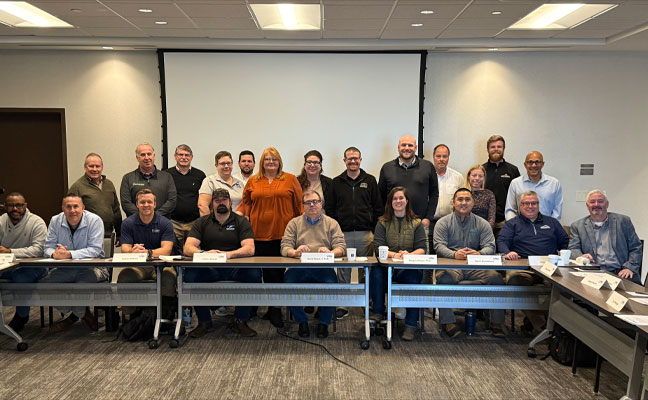
The Virginia Pest Management Association (VPMA) convened its board of directors, committee chairs and invited guests for a high-impact board planning meeting designed to build on the successes of 2025 and illuminate a strong path forward for 2026. Guided by newly installed President Shannon Harlow-Ellis, ACE, the association’s brightest minds came together to envision a vibrant future for VPMA’s members and the broader pest management profession across Virginia.
Harlow-Ellis opened the meeting by reaffirming VPMA’s commitment to its mission and vision — promoting ethical, environmentally responsible pest management and serving as the premier resource supporting the industry statewide. With renewed energy and focus, leaders evaluated committee charters, re-engaged both seasoned and emerging contributors and established major organizational goals for the year ahead.
IMAGE: VPMA
Reflecting on a year of achievement: 2025 highlights
Virginia pest management summit success
The 2025 Summit marked the 20th presentation of this long-loved meeting, bringing together professionals from across the state for a refreshed, re-energized and highly engaging program. Attendees praised the Summit’s quality and dynamic sessions, noting that they “couldn’t wait to return to their seats for each presentation.” Many shared that they received practical, immediately applicable information to strengthen both their business operations and technical work. With strong engagement, updated branding and a new venue, the Summit reinforced its reputation as a cornerstone event for Virginia’s pest management community and positioned it for continued growth in the years to come.
Spring recertification webinars meet industry needs
VPMA’s Spring Recertification Webinars continued to deliver high-quality, timely training serving both members and non-members across Virginia. These virtual programs remain one of the Association’s most effective avenues for reaching a broad audience and supporting the ongoing recertification needs of the pest management profession.
Petition for rulemaking gains support
VPMA’s petition to revise Category 8 certification received strong backing, including support from the current Commissioner of Agriculture and 27 public comments from industry members. This effort highlights VPMA’s role in elevating issues that impact members’ ability to hire, train and certify technicians, ensuring these concerns are brought to the attention of regulatory partners along with proposals for meaningful, practical change.
Cat 8 prep course achieves outstanding success
VPMA collaborated with VDACS to deliver comprehensive study materials and expert-led instruction to 45 course participants — all of whom successfully passed the Category 8 exam. Given that the typical Cat 8 pass rate is in the low 30% range, this remarkable 100% success rate underscores the exceptional quality of the preparation, guidance and review provided in the course.
Strategic areas of focus for 2026
1. Education
VPMA will continue expanding core educational programs, including WDI Certification, Master Technician training, recertification webinars, the annual Summit and the Jeffrey M. Johnson ACE Prep Course.
New for 2026, VPMA will launch a WDI Inspector Recertification Course, designed not merely as a refresher but as an advanced “201-level” program that will renew voluntary WDI certification for an additional two years.
VPMA aims to be a true training partner for members by offering professional-level education that equips technicians to meet customer needs, while reducing the burden of developing extensive in-house training. Professional branding materials — including program logos — will be developed to highlight this commitment to excellence.
2. Legislative and regulatory affairs
VPMA will maintain strong engagement with VDACS, state and federal lawmakers and EPA partners to navigate regulatory changes and advocate for the profession. With many newly elected or re-elected Virginia state legislators, 2026 provides an important opportunity to introduce VPMA to leadership and position the Association as a trusted resource on small business and pest-related issues that representatives and senators may encounter.
3. Professional development
Programs such as the STM Admin Conference, ACE Prep Course and the Leadership Excellence & Action Program (LEAP) will continue to advance leadership and professional excellence within the industry. These initiatives help PMPs build personal and professional skills that support career advancement, strengthen communities and expand business opportunities.
4. Connections and community growth
Recognizing significant opportunities to reach thousands of Commercial Applicators and Registered Technicians across Virginia, VPMA will prioritize outreach and engagement efforts statewide. VPMA not only supports the industry through education and advocacy, but also works to create a strong sense of community among pest management professionals. In 2026, VPMA will host regional spring hands-on training events in each of the four geographic areas of the state, along with Fall 4×4 Social events to encourage networking and relationship building.
Looking ahead: A bright year on the horizon
“Our brightest minds came together to envision an extraordinary year ahead,” said President Shannon Harlow-Ellis. “With renewed enthusiasm, clear goals and the combined strength of experienced leaders and new voices, VPMA is poised to shine even brighter in 2026.”
VPMA will continue developing its 2026 action plan, focusing on elevating member value, expanding educational opportunities, strengthening advocacy and fostering a thriving community of pest management professionals across Virginia.
Many pest management professionals (PMPs) I meet ask whether I know of any smaller companies they can buy in their market. They proceed to tell me in detail the specific area and type of company they are looking for. I always let them know I will keep them apprised when I get something that fits their appetite.
I also attempt to tell them what they can do to find these companies on their own. After all, I spent many years as a local buyer and completed 40 acquisitions in my market. Here are three significant actions to take if you will be on the hunt in 2026:
Key takeaways
Develop relationships first: Proactively meet and build goodwill with all local competitors, as relationships are the foundation for future opportunities.
Expect inconvenience: Be prepared for the acquisition process to be highly emotional and time-consuming , requiring tolerance for business practices you may not allow in your own company.
Maintain post-close goodwill: Ensure the seller is happy after the deal is finalized to protect your reputation and future acquisition opportunities.
1. Develop relationships with all local competitors
This first step requires significant time and effort. When you see your competitors at trade shows, convenience stores and lunch spots, approach them and introduce yourself. You don’t need an agenda other than getting to know people in the same industry.
Exchange cell phone numbers and offer to help them in any way possible. I have loaned equipment and vehicles to competitors when they were in urgent need and had my staff help them with customer relationship management (CRM) training. Of course, you can pick up ideas and insights from them to help better your business along the way, as well.
You should know dozens of competitors in your market. Whenever I was near my competition’s office location, I’d stop in and introduce myself. If I had the chance, I’d buy coffee for their employees. In 35 years, only one owner ever got upset about me dropping by — she later apologized.
PHOTO: VIOLETASTOIMENOVA / E+ / GETTY IMAGES
My staff thought I was extraordinarily talented at buying local competition, but the reality is, I was converting less than 5 percent of the local contacts I had made. My goal was to meet two new companies every week and make two acquisitions every year. Forming relationships is where it starts.
2. Realize opportunities often come at inconvenient times
The process of acquisition is emotional and time-consuming. You will need to expect and understand what you are walking into when you acquire a competitor.
This can include dealing with employee concerns or practices you never would allow at your own company. I once acquired a business where every technician went home for lunch every day and was allowed to have their kids in the company truck before and after school. While we all have accommodated employees’ personal needs at some time or another, be ready for this aspect of the process.
3. Ensure the seller stays happy after the deal is done
An unhappy seller will hurt your chances for future opportunities. Try to maintain a relationship with the seller after the deal closes, such as meeting regularly for coffee and conversation.
One owner, whose business I acquired over 20 years ago, still meets me for lunch every Christmas. Every year, he gives me a collectible White House Christmas ornament. My kids know him as the “White House Christmas ornament guy”.
Buying local companies requires you to get out of your office and invest time and effort into developing relationships that could potentially become prospects. The relationships you create will end up paying dividends in all kinds of ways for you and your business.
Williamson is an industry veteran and the pest and lawn director for Cetane Associates, a company that offers pest management firms advice on sales, spin-offs and acquisitions, as well as performs valuation and ad-hoc corporate finance assignments. Learn more at Cetane.com.
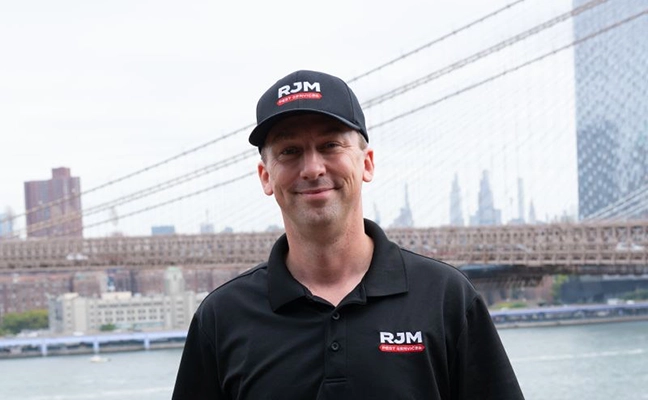
Joe Barlok, ACE, VP of service for RJM Pest Services in New York City and husband, father and grandfather, passed away in late November. Per his wishes, there will be no funeral. Those who would like to reach out to his family with their condolences are invited to post on his Facebook page.
I was a 20 year old new father and needed a steady job with an opportunity at a career. My hiring wage of $11/hr was the blessing and new opportunity my new family needed. The rest of the work experience is all about relentless hard work, overcoming challenges and dedication to providing only the best service possible. Looking back now on the past 22+ years in the pest control industry I wouldn’t change one day or challenge. I am thankful for all of it and the people I have met and had the pleasure to work with along the way. Starting on the west coast at Lloyd Pest Control in San Diego County they shaped my love and passion for the industry. Moved to the east coast and have been working in NYC since 2009 with Western Pest Services (Rollins), RJS, and JP McHale (Anticimex). Now having the honor and responsibility to lead the service department at RJM Pest Services, I have the opportunity to share the same excitement for high level of quality service that originally inspired me.
Timson Green, a friend and former co-worker, shares his remembrances of Barlok as follows:
In the pest management industry, there are what I call the “Fantastic Few.” They are people committed to providing their clients with the best possible experiences, and they work hard to ensure that every detail is perfect. They understand that exceptional customer service is a powerful tool for motivation and reward, and they are dedicated to helping their clients create lasting memories.
Rodents, cockroaches, bed bugs and flies are some of the pests we constantly deal with in many markets around the country. These pests are normally found in dark, creepy areas of sub-basements, crawlspaces, near sewer injector pits and in voids of pipe chases.
Joe often said, “If you can’t find it, you can’t fix it. Dark and creepy areas are where most of our development happens.”
Joe had always been a hands-on team player and team leader, an expert who believes in developing the next wave of problem solvers. Leadership is about making everyone else better.
There are three key areas to running an organization: the financials, the development of others, and the standardization of service expectations. Joe checked all the boxes when it comes to these capabilities and set the tone for pest management professionals to emulate. His vision was rooted in building an experienced team, providing exceptional service, and guaranteeing proven results.
It is in the valley that we slog through the lush grass and rich soil, learning and becoming what enables us to summit life’s next peak. There is no growth on the top of a mountain. Leadership is not about being the best; rather, it’s about making everyone else better.
Joe Barlok will forever be remembered as a face of the Fantastic Few.
Over 40 people representing 10 member companies, the Georgia Department of Agriculture, and the GPCA staff sorted and packed food as a giving back opportunity. The team prepared over 16,500 pounds of food to be delivered to food banks and other outreach stations throughout the state, providing support for those dealing with food insecurity.
The service project is one of many recent initiatives from the GPCA. Previous projects have included:
GPCA PestVets coat drive: run in collaboration with the Cherokee County Homeless Veterans Program, the GPCA has collected thousands of coats for Veterans across the yearslong partnership.
Founded in 1950 with only 16 members, the GPCA has grown to include over 85 percent of all pest control operators in Georgia. With a focus on all facets of the pest control industry that promote economic growth, the GPCA seeks to encourage professionalism, school operations, commercial establishments, home management, education and community involvement.
About the Atlanta Community Food Bank
As a member of Feeding America, its mission is to fight hunger by engaging, educating, and empowering our community. The ACFB works with nearly 700 community-based nonprofit partners to distribute 9 million+ meals across metro Atlanta and north Georgia each month.
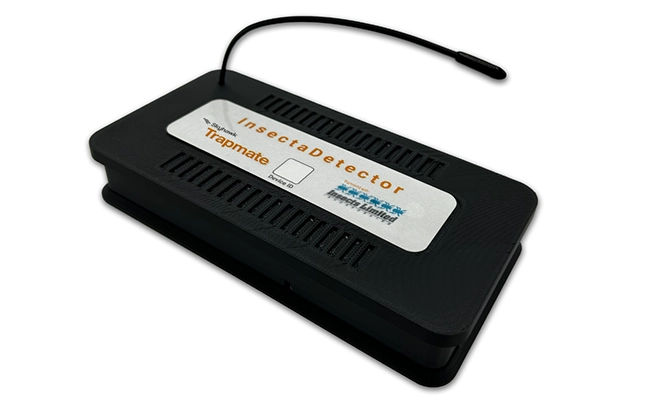
The new Trapmate InsectaDetector, developed in partnership with Insects Limited, is a precision sensor–based device designed to automate crawling insect monitoring and deliver early-warning intelligence. Pheromone lures attract target insects into the device, guiding them onto a glue board while high-precision sensors record each pass-through. These time-stamped counts are transmitted through the Trapmate Hub using the same proven, self-powered technology found across the Trapmate ecosystem. Integrated seamlessly into the Trapmate software platform, InsectaDetector eliminates manual glue-board checks, provides customizable notifications and helps technicians detect activity trends early — reducing labor, improving accuracy and strengthening proactive pest management.
About Skyhawk Trapmate
Skyhawk Trapmate is a division of Skyhawk, a U.S.-based company specializing in remote monitoring technology for pest and wildlife professionals. Trapmate’s wireless, battery-powered sensors provide real-time trap activity and data to enhance technician efficiency, reduce service visits, and increase client retention.
About Insects Limited
Insects Limited has been an industry leader in pheromone-based monitoring and control solutions for over 40 years. With a strong foundation in research and development, Insects Limited provides sustainable, science-based tools for the pest control and food protection industries. Based in Westfield, Ind., the company was founded in 1982 by David Mueller, BCE, a member of the Pest Management Professional Hall of Fame (Class of 2019).