Monday, March 4, 2019

Inspect-All makes Bulldog 100 list

Brian Lunsford (left) and Brandon Lunsford on stage at the 2019 Bulldog 100 Celebration. PHOTO: INSPECT-ALL SERVICES

Brian Lunsford (left) and Brandon Lunsford on stage at the 2019 Bulldog 100 Celebration. PHOTO: INSPECT-ALL SERVICES

Inspect-All Services, Conyers, Ga., was named one of the fastest-growing businesses owned or operated by a University of Georgia (UGA) graduate during the 10th annual Bulldog 100 Celebration.

This is the company’s ninth consecutive year on the Bulldog 100. Inspect-All Services has the distinction of being the company that has been on the list the longest. This year, it ranked No. 77.

Inspect-All Services, co-owned by siblings and UGA graduates Brandon Lunsford and Brian Lunsford, serves the Atlanta, Ga., and Jacksonville, Fla., metropolitan areas and specializes in pest control and home inspections.

“It’s humbling that our company has been on this distinguished list longer than any of the other 99 outstanding Bulldog 100 businesses,” say Brandon and Brian Lunsford in a joint statement. “We are grateful for our customers, our team and the University of Georgia, all of which have allowed us to celebrate this honor every year for nearly a decade and counting.”

The Bulldog 100 is coordinated by the UGA Alumni Association and recognizes the 100 fastest-growing businesses owned or operated by UGA graduates.

Approximately 500 nominations were received for the 2019 Bulldog 100. Each organization must have been in business since 2013, experienced revenues in excess of $100,000 for the calendar year 2014, and be owned or operated by a former UGA student who owns at least 50 percent of the company or is the CEO, president or managing partner.

The Bulldog 100 recognizes the fastest-growing businesses regardless of size by focusing on a three-year compounded annual growth rate. The average compounded annual growth rate for this year’s Bulldog 100 businesses was 62 percent, a record high.


from Pest Management Professional https://www.mypmp.net/2019/03/04/inspect-all-makes-bulldog-100-list/
Sacramento CA

5 tips to finding cockroach harborages in commercial kitchens

PHOTO: ISTOCK.COM/RONBAILEY

Even if the kitchen surfaces are gleaming, it’s what lies beneath that keeps the cockroaches fed. PHOTO: ISTOCK.COM/RONBAILEY

  • Your search pattern matters for German cockroach inspections.
  • Don’t miss the clues by moving too fast.

When it comes to eliminating the German cockroach (Blattella germanica) from any account, especially restaurant accounts, finding them is your most important task. If you have ever found yourself sitting on the floor of a commercial kitchen, wondering where the epicenter of the cockroach population might be, you should consider improving your inspection skills. Here are some fundamentals that might help.

1. Consider the 3 Ws. The German cockroach is a cautious, nocturnal insect that relies on its ability to hide as its main survival technique. They use chemical cues from droppings to establish harborages, which makes porous surfaces such as wood, pressed board or cardboard more attractive than solid surfaces. They need water to thrive and prefer warm places, so use the “3 Ws” — wood, water and warmth — to guide your search.

2. Incorporate an extension mirror. Cockroaches’ preferred harborage type is “dark,” but you can’t always simply crouch down and shine a flashlight on them. They often go around several corners before stopping, and finding them means getting underneath and behind equipment. An extension mirror can let you see around corners and over your head, and should be in every inspection kit.

3. Nighttime is the right time. Cockroaches are nocturnal, so make arrangements to inspect after the kitchen closes. Morning inspections can work, but it’s always easier to find them when they are active.

4. Slow and steady wins the race. Plan your inspection by starting with primary harborages and moving methodically through every area. There will be droppings and cast skins where they spend their time, so you should be looking for more than just live cockroaches. These cues can be subtle, so don’t rush your inspection. Moving too quickly is a common failing. In areas where cockroaches have been caught or observed, be sure to take your time. Assume there is a hidden area that might be missed if you rush through your search. Also, don’t skip around from one sink to the next; it just leaves holes in your inspection. Inspect every wheel, every electrical cord and every refrigerator compressor.

5. Don’t skimp on the insect monitors. Trap catch results are worth their weight in gold. Be sure to place them out of the way of kitchen operations — out of general sight is even better. If this is an initial inspection, you will have to go it on your own. Regardless of your success in inspecting, deploy monitors as you go for next time. Cockroach control is always a multi-visit affair.


from Pest Management Professional https://www.mypmp.net/2019/03/04/5-tips-to-finding-cockroach-harborages-in-commercial-kitchens/
Sacramento CA

What to focus on when dealing with flying insects

Dr. Reid Ipser, Director of Technical Services, Nisus Corp.

Dr. Reid Ipser, Director of Technical Services, Nisus Corp.

A flying insect can be a grasshopper, a fly, a moth or a wasp. Some species are strong flyers and travel long distances.

Focus on two areas when dealing with these pests:

  1. Where flying insects originate.
  2. Where flying insects rest.

To prevent drift and non-point source contamination, do not spray haphazardly into the air. Rather, focus on where individuals land, rest and breed. Depending on the species, you might only need to clean a drain or remove a birdbath. Be careful of beneficial insect species, and avoid targeting pollinators.


from Pest Management Professional https://www.mypmp.net/2019/03/04/what-to-focus-on-when-dealing-with-flying-insects/
Sacramento CA

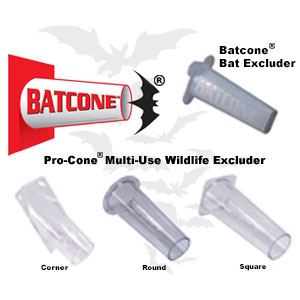
Wildlife Control Supplies: Batcone & Pro-cone

BatconeBatcone and Pro-cone provide bat removal and exclusion for residential and commercial properties. Diverse shapes with optional flanges make them adaptable to any surface or application, the company says. The Batcone is designed for bat exclusion, while the Pro-cone Multi-Use Professional Wildlife Excluder is designed for multiple species, including bats, sparrows, starlings, red squirrels, flying squirrels, rats and mice. Based on gravity and biomechanics of the animals themselves: When the Batcone or Pro-cone is positioned properly in a downward angle, with nothing to “grab” onto, it is impossible for animals to re-enter the cone, thanks to the hard plastic surface.

Batcone.com


from Pest Management Professional https://www.mypmp.net/2019/03/04/wildlife-control-supplies-batcone-pro-cone/
Sacramento CA

Control flying insects with a multi-method program

Product Development Manager, AMVAC Environmental Products

Dr. Chuck Silcox, Product Development Manager, AMVAC Environmental Products

Effectively controlling flying insects like flies, gnats, mosquitoes and moths is best accomplished by developing a program that includes physical, cultural and chemical control methods. Many products are available to control these pests in the various environments they inhabit.

In trash receptacles and other labeled application sites that are occupied by humans for fewer than four hours a day — like attics, barns, enclosed crawlspaces and garages — I suggest using a product in a resin strip formulation with the active ingredient dichlorvos to provide protection.


from Pest Management Professional https://www.mypmp.net/2019/03/03/control-flying-insects-with-a-multi-method-program/
Sacramento CA

Rentokil releases their sparkling 2018 financial results

On 28 February 2019 Rentokil Initial released their 2018 results which were in excess of their own medium term financial targets. Operating profit was 13.3% up. As a result their shares rose by 8%.

from SmartBlog https://www.pestmagazine.co.uk/en/news/posts/2019/march/rentokil-releases-their-sparkling-2018-financial-results
Pest Control Pros

Sunday, March 3, 2019

Mold and Mental Health

mold mental health

It’s an increasingly common understanding that a link exists between mold and mental health, but does the presence of mold create psychological issues or merely mimic them? In an age where more than half of US homes face significant mold problems and one in four people suffer from a mental health disorder – the same proportion of those at risk of toxic-based mold illness (coincidence?) – MoldBlogger investigates!

Chronic exposure to harmful environmental toxins can interfere with the normal functions of the body – both physiological and psychological – to such an extent that many psychiatric practitioners now routinely test for mold toxicity.

Studies

Ever since Dr. Ritchie Shoemaker published a series of books about mold toxicity – positing publicly for the first time that exposure to biotoxins may causes changes in the brain in the early years of the 21st Century – studies have spiralled.

New York psychologist, Cheryl Harding led an experiment which found that exposure to mold spores can cause cognitive deficits, depression and anxiety. “Our basic hypothesis is that mold inhalation, like bacterial infection, activates an innate immune response triggering microglial activation with resultant behavioral dysfunction,” the researchers wrote. It’s vital to note an observation made by epidemiologist of Brown University, Edmond Shenassa, however, who reportedly said that the heightened risk of depression could also be down to the lack of perceived control. “If you are sick from mold and feel you can’t get rid of it, it may affect your mental health.” Psychology professor at British Columbia, Robert Gifford, also casts some doubt around the factor of income, which could be an important variable as wealthier people can afford to eliminate mold whereas those who are less well-off may be forced to live with it.

Further research comes from a Denmark-based study, which found that having an autoimmune disease (which can be caused by mold exposure) increases the risk of an accompanying mood-disorder by 45%, whilst another European study found that the level of depression in a mold-infested property was 35-40% higher than in mold-free dwellings.

Another Polish study of children found that those living in moldy conditions suffered a cognitive decline compared to their peers. And on it goes.

Interestingly, psychiatrist Dr. Mary Ackerley, who has written extensively on the subject, believes that despite whether a psychological problem is caused by a biotoxin or not it is almost always based in an accompanying physiological condition – meaning more often than not, it is treatable. “I’m not going to say that mold causes manic psychosis or depressed psychosis”, she says, “but I think it clearly exacerbates existing psychosis. Getting people out of exposure and treating the mold seems to restore normal brain function.” She adds that those who present to her after the age of 50 with no family history of mental illness will first and foremost be met with an approach looking at biotoxins – primarily mold – followed by various autoimmune disorders.

Treatments

–          Fish oil. Studies have proven this as an effective treatment for cutting psychotic illness and schizophrenia by 25%.

–          Diet. The Ketogenic diet eliminating sugars and simple carbs is effective in treating epilepsy in children, whilst Dr. Ackerley also encourages her patients to ditch gluten and dairy.

–          Supplements. Magnesium, turmeric, probiotics and Vitamin D have all been proven to have a positive effect on the brain and associated conditions.

Moving Forward

Somewhat frustratingly for those who suffer, mold toxicity is often not considered as a real possibility by conventional practitioners as they fail to account for the notion that only one in four have a genetic predisposition to it – which easily explains why in a whole mold-infested household not all the residents will suffer from it.

Still, The International Society for Environmentally Acquired Illness (ISEAI)  – an exciting new organization – is on a mission is to “restore health to individuals with environmentally acquired illnesses through clinical practice, education, and research.”


Further reading: Mold Toxicity: A Common Cause of Psychiatric Symptoms.


from Mold Blogger https://moldblogger.com/mold-and-mental-health/
Mold Remediation Baltimore