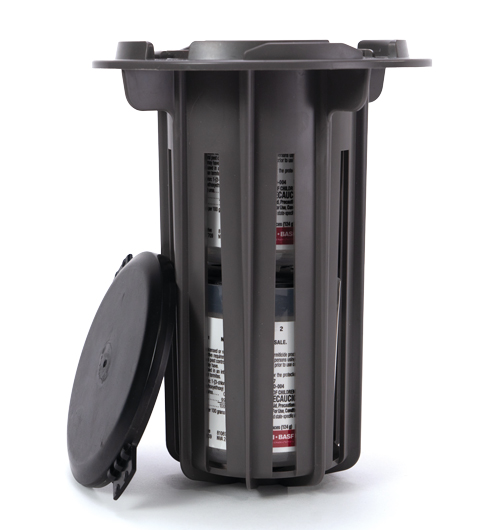
Trelona ATBS Annual Bait Stations from BASF offer a low-profile, durable design with a dose-independent active ingredient, making them an excellent choice for both preventative and remedial termite control. The stations are preloaded with the active ingredient before being installed on the property, and are the ideal treatment for homeowners who prefer active termite protection from day one.
Trelona stations sit right at soil level to reach termite colonies, not lawnmower blades. Per research at the University of Delaware, their exclusive design means termites find Trelona stations faster, which translates to faster consumption of bait and faster elimination of termites.
Plus, the flexible label gives pest management professionals the option of conducting inspections just once a year. Not only is Trelona an excellent option for integrated pest management (IPM) programs, but it also benefits specific business models because you own the product and the accounts.
Talk to your BASF representative or distributor today to learn how to level up your termite control program with highly effective and efficient Trelona ATBS Annual Bait Stations.
About BASF
BASF Corp., headquartered in Florham Park, N.J., is the North American affiliate of BASF SE, Ludwigshafen, Germany. BASF has more than 15,000 employees in North America and had sales of approximately $70 billion in 2025.
BASF creates chemistry for a sustainable future by combining economic success with environmental protection and social responsibility. More than 110,000 employees in the BASF Group contribute to the success of its customers in nearly all sectors and almost every country in the world. BASF’s portfolio is organized into six segments: Chemicals, Materials, Industrial Solutions, Surface Technologies, Nutrition & Care and Agricultural Solutions.
In addition to its Termite Bait Solutions, BASF offers many pest control solutions to professionals, including, but not limited to:
The National Pest Management Association (NPMA) has published its Fall & Winter 2026 Bug Barometer. Twice a year, NPMA’s board-certified entomologists (BCEs) examine recent weather history along with long-term weather and drought forecasts and pest biology to provide a region-by-region look at the pest activity.
Per the Fairfax, Va.-based association’s official news release, this year’s outlook points to warmer-than-average fall temperatures across much of the continental U.S., which could give pests like ants, mosquitoes and ticks more time to forage and reproduce before cooler temperatures eventually prompt others, like cockroaches and rodents, to seek shelter indoors.
“Weather is one of several important pieces in forecasting pest activity, and with summer-like temperatures forecasted to continue, pests are going to take advantage of the extra time,” Dr. Jim Fredericks, senior vice president of public affairs for NPMA, said in the news release.
NPMA’s Fall & Winter 2026 Bug Barometer predictions include:
Mid-Atlantic & New England (Maine, New Hampshire, Vermont, Massachusetts, New York, Rhode Island, Connecticut, New Jersey, Pennsylvania, Delaware, Maryland, Washington, D.C., Virginia):
Hot summer-like temperatures lasting into fall could keep ticks and ants active later than usual. If warm and dry conditions persist into fall, pressure from cooler-season pests like rodents, Asian lady beetles and boxelderbugs may be delayed.
Southeast (North Carolina, South Carolina, Georgia, Alabama, Florida):
Warm, wet conditions may extend mosquito and cockroach activity. Prolonged rain could boost food availability for rodents, setting the stage for increased encounters as temperatures cool.
Great Lakes, Ohio Valley & Midwest (West Virginia, Ohio, Kentucky, Indiana, Michigan, Wisconsin, Illinois, Iowa, Missouri, Minnesota):
Above-average temperatures may lead to a longer season for stinging insects and ticks as they take advantage of the favorable conditions.
North Central (North Dakota, South Dakota, Nebraska, Kansas, Montana, Wyoming):
Predictions of warm fall temperatures and increased rainfall could mean more ant, tick and mosquito activity.
South Central (Mississippi, Tennessee, Louisiana, Arkansas, Oklahoma, Texas):
Warm, wet conditions well into the fall could allow cockroaches, ants and mosquitoes to remain active later in the season than usual.
Intermountain & Southwest (New Mexico, Arizona, Utah, Colorado, Nevada, California):
Heavier rainfall could push scorpions and spiders indoors in search of drier conditions. Continued heat and moisture may increase mosquito activity.
Northwest (Idaho, Washington, Oregon):
Unseasonably warm temperatures combined with drier fall conditions may extend ant and stinging insects activity. Rodent encounters could increase as temperatures cool.
Previous report trends
2025: Entomologists predicted earlier and increased activity from ticks, mosquitoes, ants and cockroaches, meaning more frequent pest encounters outdoors and inside homes.
2024: NPMA expert entomologists predicted earlier and more active populations of pests such as ticks, mosquitoes, ants and others in many regions, with conditions this year likely to boost pest activity beyond typical seasonal patterns.
2023: The NPMA predicted that during spring and summer pests like ants, mosquitoes, ticks, termites, spiders and others were expected to become more common and active.
About the NPMA
The National Pest Management Association is a non-profit organization with more than 4,000 members. It was established in 1933 to support the pest management industry’s commitment to the protection of public health, food and property from the diseases and dangers of pests. The association has had many notable leaders over the years, including Pest Management Professional Hall of Famers Bill Buettner (Class of 1998), Dr. Ralph Heal (Class of 2003), Dr. Phil Spear (Class of 2004) and Bob Rosenberg (Class of 2013), to name just a few.
For more than 120 years, MGK has believed curiosity leads to better solutions. Visit Booth 1231 to explore how our history of innovation continues to shape the future of professional pest management. From our earliest botanical research to today’s advanced technologies, discover the ideas, products and people driving what’s next.
Logo: NyGuard IGR
Where curiosity comes to life
Progress doesn’t happen overnight. Since 1902, MGK’s spirit of curiosity has fueled more than a century of scientific discovery, helping shape both our company and the pest management industry. At Booth 1231, explore interactive displays that trace our journey from botanical beginnings to today’s trusted technologies.
Correy Hildebrand
See how that commitment comes to life through the MGK portfolio, including NyGuard, Sumari, Vendetta, Onslaught, Shockwave and CrossFire. From the celebrated NyGuard Legacy to our expanding Smart Sustainability Solutions, discover how decades of research have evolved into practical tools that help pest management professionals (PMPs) tackle today’s challenges.
Innovation through education
Innovation extends beyond products. Join MGK Technical Field Specialists Tommy Powell and Correy Hildebrand as they explore the growing role that botanical insecticides and products that are exempt from the U.S. Federal Insecticide, Fungicide and Rodenticide Act 25(b) provision have in integrated pest management. Learn how these emerging technologies can help PMPs navigate evolving regulations, meet changing customer expectations and strengthen their treatment strategies.
Tommy Powell
Continue the conversation
Whether you’re looking for new solutions, technical expertise or a fresh perspective on the future of pest management, the MGK team is ready to connect. Stop by Booth 1231 to explore our latest innovations, meet our experts and discover what’s next.
B&G’s Standard Rodent Stations pair durable construction with a discreet, low-profile design that offers maximum versatility in commercial and residential environments. The sturdy, thick-walled plastic features a high-capacity bait chamber with easy-to-clean rounded corners for fast and efficient service.
Your station placement strategies can easily adapt to the individual needs of an account because the flexible design can be positioned horizontally, vertically, in corners or against walls. The Standard Rodent Station also features universal key access and is available with a weighted base for added stability and security when tamper-resistance is required.
About B&G Equipment
B&G Equipment, a Pelsis brand, has set the standard in professional-grade pest control, vector control, disinfection and industrial equipment since 1949, starting with the introduction of its iconic Primeline Sprayer. This industry icon was created by Pest Management Professional Hall of Famer Bill Brehm (Class of 1998) and George Gilmore while students at Purdue University, with their initials serving as the company name.
Today, B&G Equipment serves industry experts world-wide with a complete line of sprayers, foggers, aerosols, foamers, modular systems and dusters for use in commercial, industrial and residential settings.
About Pelsis
Founded in 1984, Pelsis is based in Knaresborough, North Yorkshire, England, and operates from 16 locations worldwide. With distribution centers in the UK, Spain, Belgium, Netherlands, Denmark and the USA, plus a number of global logistics partners, Pelsis supplies customers in more than 80 countries. Its family of brands for the professional pest management industry and related industries include AgriSense, B&G Equipment, Bird-B-Gone, Brandenburg, Curtis Dyna-Fog, Denka International, Doff, Edialux Home-Pet-Plant Protection, Edialux Professional Products, GreenProtect, Insect-O-Cutor, Luxan, Network, P+L Systems Washroom, Pelsis Insect Light Traps, Pest-Stop, Silvandersson and Synergetic.
A new study from the University of Maryland (UMD) discovers how to make the fungus Metarhizium robertsii even more effective at controlling ants, flies, ticks and other pests. The findings, published in the July 1, 2026, issue of Proceedings of the National Academy of Sciences, found that “found that “strains capable of using a wider range of nutrients were both faster and deadlier at killing insects and more effective at colonizing plant roots,” per a news release on the topic.
“We expected to see a trade-off—that becoming a better plant partner would come at the cost of being a good killer or vice versa,” said the study’s senior author, Dr. Raymond St. Leger, a Distinguished University Professor of Entomology at UMD. “Instead, the two abilities rise and fall together, and what links them is the fungus’s underlying nutritional flexibility.”
By analyzing and testing eight strains of M. robertsii, the team measured toxicity, plant-root colonization, toxin activity and growth on 95 different nutrients. They found that the strains split into two groups, described in the news release as follows:
Sleepers: The fungal strains that diverged early (at least 6 million years ago) behaved like “sleepers.” They kill insects slowly but pour resources into multiplying inside the host and producing huge numbers of spores, allowing them to survive until they encounter another host.
Creepers: Fungal strains that diverged more recently behave like “creepers.” They germinate quickly on both insect skin and plant roots, kill rapidly, often deploy paralyzing toxins and grow as creeping threads from insect cadavers onto nearby roots, rather than forming spores.
“Instead of forcing fungi to choose between being insect killers or plant partners, evolution appears to have favored strains that are simply better at making use of whatever resources they encounter,” Dr. St. Leger said. “Their versatility begins with metabolism.”
The research is leading to learning more about how to harness these two groups to better control not only crop and greenhouse pests, but structural pests, too. The news release notes that “broadly metabolizing strains of fungi could provide rapid suppression of insect pests,” while the fungal strains that produce large numbers of spores “may be better suited for longer-term pest control.”
The Certified Entomologists of Mid-America (CEMA), a chapter of the Entomological Society of America, held its annual meeting from Aug. 7 through Aug. 8, in Des Moines, Iowa.
The event began on Friday evening with a social gathering and dinner, allowing members to reconnect and network in a relaxed setting. On Saturday, the group enjoyed a tour of the Greater Des Moines Botanical Garden. We heard a presentation by Addie Frohardt, a garden caretaker, on the balcony inside the dome. We learned about the gardens’ ecosystem and the integrated pest management (IPM) methods they use to control insects in their exhibits. After enjoying the botanical gardens, the group held its annual board meeting.
The North Central Branch of CEMA Attendees represented all four states within the CEMA region: Missouri, Kansas, Nebraska and Iowa.
About CEMA
The Certified Entomologists of Mid-America (CEMA) provides a valuable platform for entomologists to connect, collaborate, and expand their knowledge. Open to both Associate Certified Entomologists (ACE) and Board Certified Entomologists (BCE) in Missouri, Kansas, Nebraska and Iowa, CEMA fosters a diverse community of professionals.
Members come from various backgrounds, including academia, research and development, product manufacturing, consulting and pest management. This rich diversity of expertise creates a dynamic environment for learning and sharing insights.
CEMA also supports the advancement of entomology by sponsoring several awards annually for outstanding extension projects within the Entomological Society’s North Central Branch.
The BASF Pest Control Solutions team is excited to ride into Dallas, Texas, for what’s sure to be a memorable PestWorld for everyone who attends. If you are looking for innovation, trusted solutions and boots-on-the-ground connections, BASF offers all three, bringing its portfolio to life in a bold, fun booth that sets the stage for our go-to products that help pest management professionals (PMPs) take on tough challenges with confidence.
Inspired by the energy and grit of a rodeo, the BASF “Last Ride for Pests” theme for Dallas is all about preparation, precision and dependable performance. Our booth hosts are experienced team members who can help you wrangle tough situations with fresh insights into our general insect control (GIC) and termite innovations.
A new GIC partner enters the chute
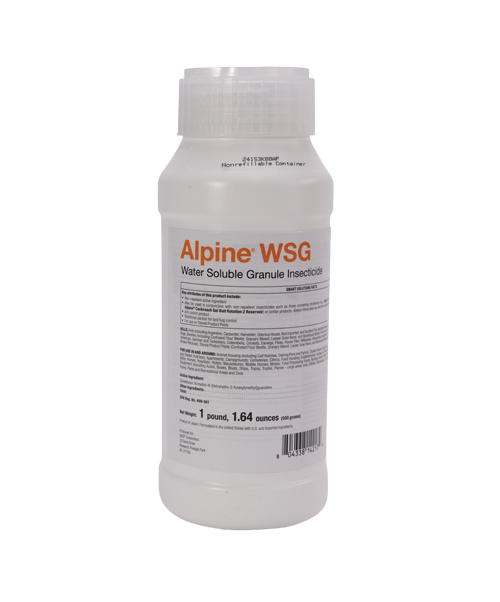
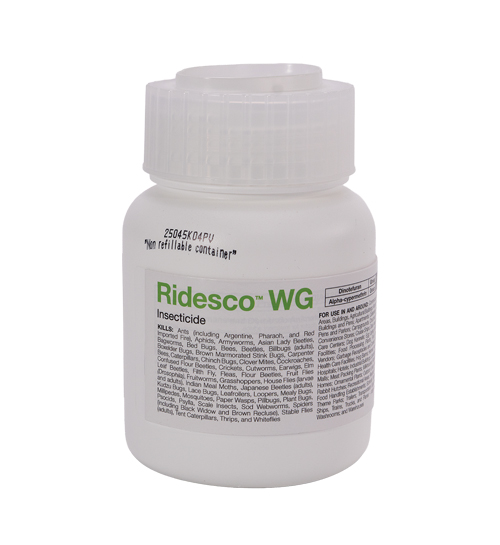
Visitors will learn about our newest innovation that will be available to purchase in January: Tectiva Cockroach Bait Gel is sure to become a legend in the arena for wiping out high-intensity cockroach infestations. Returning to the chute are fan favorites Alpine WSG Water Soluble Granule Insecticide, which some folks compare to a silver bullet; built-to-last Fendona CS controlled release insecticide and rising star Ridesco WG Insecticide.
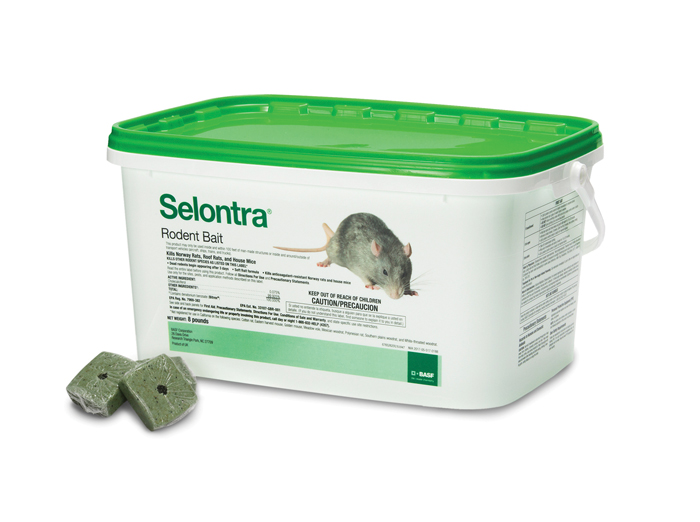
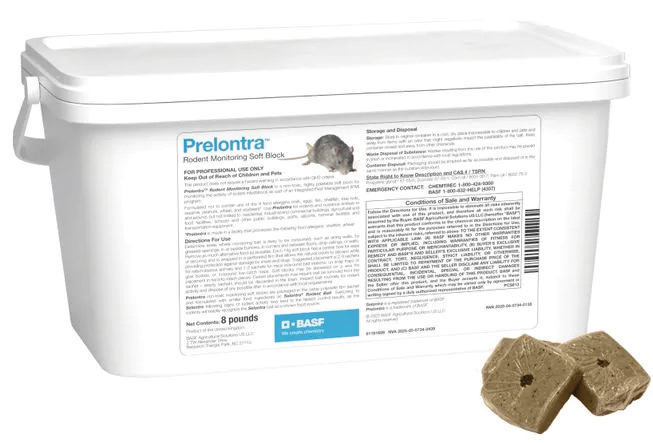
When it’s time to clear rodents out of the barn (and elsewhere), new Prelontra Rodent Monitoring Soft Block and Selontra Rodent Bait offer dependable performance. Other stars in our rodeo include specialty aerosols like PT Alpine Pressurized Fly Bait and PT Alpine Flea & Bed Bug Pressurized Insecticide.
Holding the reins on termites
Introduced at last year’s PestWorld as a coming attraction, our smart home technology option for termite monitoring, the Encircle Remote Termite Detection System, is the newcomer to watch and an example of where grit meets innovation.
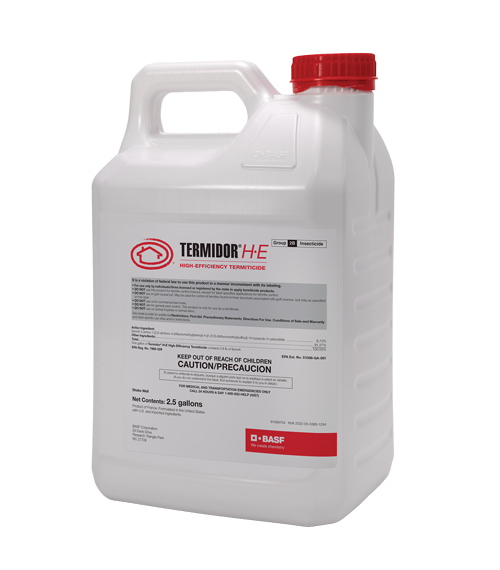
A legendary star for more than 25 years, the Termidor brand continues to make its mark on the trail as the most trusted liquid termiticide on the U.S. market. For the baiting fan club, Trelona ATBS Annual Bait Stations are built for the long haul. And for the total termite solutions package, talk to our team members to find out how Termidor Foam Termiticide/Insecticide or Termidor HE High-Efficiency Termiticide can complement your baiting program by ensuring coverage of hard-to-reach, above-ground spaces.
A winning ride with BASF
Whether you need options for general pests, rodents or termites, BASF has the comprehensive portfolio you need to win against the toughest pests. Our team looks forward to greeting you in the arena and helping you put pests out to pasture with our essential solutions.
Editor’s Note: These meetings will take place during the National Pest Management Association’s (NPMA’s) PestWorld at the Gaylord Texan Resort & Convention Center in Grapevine, Texas. All times are Central Daylight Time. The schedule is subject to change. See PestWorld2026.org for more info.
Tuesday, Oct. 20
8 a.m. to 9:30 a.m.: Business Innovations Committee Meeting, open to all PestWorld attendees.
Room: San Antonio 6
8 a.m. to 9:30 a.m.: Employee Recruitment and Retention Committee Meeting, open to all PestWorld attendees.
Room: San Antonio 5
10 a.m. to noon: Pi Chi Omega Membership Meeting, guests welcome.
Room: Dallas 2
11 a.m. to 11:45 a.m.: First Timers Orientation.
Room: Texas 1-3
11 a.m. to 11:45 a.m.: International Delegates Welcome.
Room: Texas 4-6
11 a.m. to 12:15 p.m.: Wildlife Committee Meeting, open to all PestWorld attendees.
Room: San Antonio 5
Wednesday, Oct. 21
7 a.m. to 8:30 a.m.: Professional Women in Pest Management (PWIPM) Networking Breakfast, sponsored by FieldRoutes.
Room: Texas C
10 a.m. to 11:30 a.m.: Fumigation Committee Meeting, open to all PestWorld attendees.
Room: Austin 5
11:30 a.m. to 1 p.m.: Marketing to Membership Committee Meeting, open to all PestWorld attendees.
Room: Austin 4
11:30 a.m. to 1 p.m.: PestVets Council Meeting, sponsored by Envu and open to all PestWorld attendees.
Room: Austin 5
Noon to 1:30 p.m.: Leadership Networking Community (LNC) Council Meeting, sponsored by Corteva and open to all PestWorld attendees.
Room: Austin 6
3 p.m. to 4:30 p.m.: Public Policy Committee Meeting, open to all PestWorld attendees.
Room: Austin 4-6
4:30 p.m. to 7 p.m.: United Producers, Formulators and Distributors Association (UPFDA) Annual Membership Meeting and Reception.
Room: Fort Worth 1-2
Thursday, Oct. 22
10 a.m. to noon: Technical Committee Meeting, open to all PestWorld attendees.
Room: Austin 5-6
10 a.m. to 11:30 a.m.: Workforce Development Steering Committee Meeting, open to all PestWorld attendees.
Room: Austin 4
Noon to 1:30 p.m.: Culture and Engagement Committee Meeting, open to all PestWorld attendees.
Room: Austin 4
2 p.m. to 4 p.m.: Global Pest Management Coalition Meeting, open to all PestWorld attendees.
Made with the acute active ingredient bromethalin, Bell Laboratories’ FASTRAC All-Weather BLOX are especially effective for knocking down large rodent populations.
Rodents can consume a lethal dose in a single feeding, and mortality may occur in as little as 24 hours. As a result, rodents consume less FASTRAC compared to anticoagulant baits, allowing pest management professionals to control more rodents with less bait. This saves money on rodenticide while eradicating infestations.
FASTRAC BLOX pair potency with palatability. Each extruded BLOX is made with purified bromethalin, small amounts of paraffin, and high-quality ingredients to achieve maximum rodent acceptance. All BLOX are moisture- and mold-resistant so they can be used in any condition — wet or dry, indoors or out.
About Bell Labs
Founded in 1974 by the late Malcolm Stack, a member of the Pest Management Professional Hall of Fame (Class of 2004), Bell Labs today is based in Windsor, Wis., and manufactures rodenticides and other rodent control products available to the pest control and agricultural industries on six continents. It is led by another Pest Management Professional Hall of Famer, CEO Steve Levy (Class of 2022). Bell’s complete line of products includes rodenticides, tamper-resistant bait stations, smart rodent monitoring devices, glue boards, mechanical traps, and attractants.
The sterile insect technique (SIT) has long provided an eco-friendly, sustainable tool for pest suppression and eradication by disrupting reproductive cycles. By releasing mass-reared, irradiated males into target environments, SIT causes wild females to lay non-viable eggs, gradually collapsing pest populations.
Because sterile insects cannot produce larvae or pose a risk to human and animal health, it’s being looked at with new enhancements for both the New World screwworm (Cochliomyia hominivorax, or NWS), as well as for Anopheles spp. mosquitoes.
Research on malaria mosqitoes
The mosquito study is especially noteworthy because SIT has been successful with Aedes species such as the Asian tiger mosquito (A. albopictus) and the yellow fever mosquito (A. aegypti) because the females of these species tend to be larger than the males, and thus easier to automatically sort. By contrast, both sexes in Anopheles spp. tend to be similar in size.
As Dr. Dongjing Zhang, of Sun Yat-Sen University in Guangzhou, China, a co-author of a new mosquito study on the subject, explains in an article from the Entomological Society of America’s online publication, Entomology Today: “Physical sex sorting relying on pupal size disparity works well for Aedes mosquitoes, yet Anopheles males and females show negligible differences in body size and pupation timing, rendering mechanical sex separation impractical. Manual sorting is extremely slow and cannot support large-scale field releases. Our approach leverages a fundamental biological distinction: Only female mosquitoes take bloodmeals, whereas males never feed on blood.”
Per the article, “when a spiked bloodmeal is offered, the females feed and drop like proverbial flies, while males ignore the blood and survive. The technique does not kill quite enough females to meet the threshold of less than 1 percent for direct release of mosquitoes, but it makes manually sorting out the few survivors a breeze.”
After testing 11 candidate compounds on Aedes albopictus, researchers verified the protocol’s success in the Asian malaria mosquito (Anopheles stephensi). The team hopes that further testing to streamline the process can clear a path for operational-scale Anopheles SIT programs.
Research on containing NWS
To maintain suppression and prevent spread of NWS, the U.S. Department of Agriculture (USDA) continuously monitors screwworm detections and adjusts sterile fly release patterns using two delivery methods:
Aerial dispersal: As the USDA notes on its website, “most sterile flies are released by air. After pupae hatch at a release facility, adult flies are loaded into chambers on an aircraft and dispersed through release tubes over the target area. Aerial release provides steady, uniform coverage across large and hard‑to‑reach regions.”
Ground Release: This method, as described by the USDA, is used “when sterile flies need to be deployed quickly or in areas beyond typical aerial coverage. Flies can be released from trucks, which disperse them much like aerial operations, or from ground release chambers — crates placed in targeted spots where pupae hatch and flies emerge, providing highly localized support where needed.”
To distinguish sterile flies from wild populations during trapping and public surveillance, the USDA dyes pupae with a fluorescent marker visible under ultraviolet (UV) light, and occasionally to the naked eye.
Operationally, NWS pupae are exposed to gamma radiation to sterilize adult flies without reducing their survival or mating competitiveness. Because female NWS mate only once, releasing these flies leads directly to population decline.
To streamline this process, the USDA is developing NovoFly, a novel, trademarked, male-only strain designed to maximize efficiency by increasing the proportion of sterile males produced for release. While NovoFly is not yet active in field operations, regulatory reviews and field evaluations are underway.
Ask almost any pest control company owner about their biggest challenge today, and you’ll hear the same answer: finding good people.
But what if the problem isn’t that great employees don’t exist? What if the problem is that we don’t recruit, hire and onboard employees with the same intentionality we use to win customers?
Biggest hiring mistake
Most companies invest heavily in marketing. They build websites, manage reviews, create customer service standards, develop sales processes and constantly ask, “How can we create a better customer experience?”
Yet when it comes to hiring, many companies have no real system at all. The employee recruiting process is often little more than posting an ad and hoping someone applies. Interviews become casual conversations instead of a structured process designed to uncover whether someone actually can perform the job. Resumes are polished marketing pieces, not proof of capability.
One of the biggest mistakes I see is hiring based on personality instead of performance. Every position should include a practical skills assessment:
If someone will answer phones, let them handle sample customer calls.
If they will sell services, have them complete a role-play.
If you’re hiring a service technician, have them spend a day riding along with a supervisor or experienced technician.
Let them see what the job really involves and let your team evaluate how candidates interact, learn and engage. Also, pay candidates for this working interview. It’s a small investment — and far less expensive than making the wrong hire. Don’t guess what someone can do. Verify it.
Beyond skills, it’s equally important to determine whether the person is naturally suited for the role. Assessments like the Kolbe A Index help identify whether a candidate’s instinctive way of working aligns with the position, dramatically improving the odds of long-term success.
But hiring is only the beginning.
Make a good impression
Too many companies spend weeks recruiting someone, only to have them show up on day one with no plan. No prepared workspace. No structured orientation. No clear training path. No excitement. First impressions matter just as much for employees as they do for customers.
Finally, don’t ignore poor fits. Keeping employees who lack the required skills, don’t align with your culture or simply aren’t right for the position is expensive. It affects morale, increases turnover, frustrates your team and ultimately impacts the customer experience.
Here’s a simple truth: If you take care of your employees, they’ll take care of your customers.
The best way to treat employees
Treat your employees as your first customers. Market your company to them. Create a hiring process worth experiencing. Invest in onboarding. Train with intention. Hire for both capability and fit. Your customers will notice the difference.
If you need help building a hiring system that consistently attracts, selects and develops the right people, we would love to help — whether it’s designing a better hiring process, implementing practical skills assessments, using the Kolbe A Index to ensure the right fit or creating an onboarding experience that sets new employees up for success. Schedule a conversation with us and let’s build a team that helps your business thrive.
Spencer Bachman is a second-generation pest management professional, and owner of the Pest Control Business Coach consulting firm based in Canton, Ga. You can reach her at Sheri@PestControlBusinessCoach.com.
“The Zoo Teen program is designed to prepare young people for future careers in the zoo community by building job-transferable skills, exploring jobs and connecting with others passionate about wildlife,” Columbian Park Zoo Educator Ryan Madden said in a news release.
The program’s stated mission is to “provide an opportunity for area youth to engage with Columbian Park Zoo, gain an appreciation for the importance of zoos and conservation, to explore animal-related careers while building transferable job skills, and to empower youth to become community leaders/advocates for conservation action.”
The 30 “Zoo Teens” go through an application and interview process and, if accepted, complete training in animal husbandry, zoo safety, teaching and customer service.
“During the summer, the Zoo Teens volunteer at least 45 hours of service working alongside zookeeper mentors to learn the inner workings of the zoo. The zoo also provides opportunities to learn about other animal-related careers, including meeting with local wildlife conservation groups and an end-of-summer trip to a larger Midwest zoo to learn how different zoos are run,” Madden said. Applications for 2027 will open in mid-January.
“Franklin Pest Solutions is dedicated to working with children of all ages to encourage their interests in the natural world,” Janelle Iaccino, marketing director with Franklin Pest Solutions, said in a news release. “It’s so important for all of us to understand the importance of the balances in nature and why honoring and preserving natural resources including animals and insects are so critical.”
2026 Zoo Teens speak of their experience
Five of this year’s Zoo Teens explain some of their favorite aspects of the program:
“I am always getting the opportunity to do new things. I love getting to do Animal Encounters where we bring out one of our ambassador animals to have an up-close meeting with the public. I love this because it not only teaches kids about how magical animals can be, but also is a chance for adults to learn more about animals they are hesitant about.” — Kinley McCoy, 15, who hopes to pursue a career as a zoo educator or in zookeeping
“I love coming to the zoo and not knowing what I’m going to be doing or where I will be working each day. I especially enjoy working with the educational ambassador animals. They all have unique care requirements and personalities that make it one of my favorite places to work. It’s fun to engage with guests through animal encounters to teach them about an animal and how they can help conserve wildlife.” — Cohen Alfano, 17, third-year Zoo Teen who is interested in a future in wildlife biology
“My two years in the Zoo Teen Program have yielded wonderful memories and unforgettable hands-on experiences that could only be made possible by being a Zoo Teen. The program has taught me that an animal’s role goes beyond making up the food web, which helps maintain a balanced ecosystem. Animals also give insights into ecosystem health and provide resources to other species through abandoned shelters, leftovers from a hunt and more.” — Yaritza Torres-Muro, 16, who wants a career in animal psychology and anesthesiology
“My favorite animal at the zoo seems to change every year, but I always feel the most connection to the goats. It is always fun learning their names and almost growing alongside them as I am soon to age out of the program.” — Ethan Furst, 16, who plans to puruse a career in zookeeping or zoology
“[A Brazilian rainbow boa named Rio is] my favorite because he is very curious, has a fun personality and I love how well he does when I take him out for encounters with the public. The Colombian Park Zoo Teen program has allowed me to work with domesticated animals as well as more exotic and endangered species.” — Piper Burke, 16, whose dream job is either an animal behavioral scientist or a marine biologist
“Learning about the balance of humans and nature is both critical and rewarding, and working with animals helps the teens, and all of us, understand that balance. We would love to have any of the Zoo Teen Program teens work with Franklin in the future,” Iaccino said in the news release. “It’s so wonderful to see kids immerse themselves in nature and care so much about the environment. After all, they are the ones who will inherit it and with teens like this, there’s so much hope for our world.”
About Franklin Pest Solutions
Since 1929, Franklin Pest Solutions has been trusted in the Midwest to keep homes and businesses free from insects, rodents, and more. Like its sister company, Rose Pest Solutions, Franklin uses cutting-edge technology, environmentally friendly methods and personalized unique solutions to create and maintain healthy living environments.
Founded in 1860 and owned by the Dold family, Rose Pest Solutions serves communities in all of Chicagoland, the Greater Milwaukee area and South-Central Wisconsin. Franklin Pest Solutions serves Indiana and Kentucky. The company boasts three Pest Management Professional magazine Hall of Fame honorees: Company founder Solomon Rose (Class of 2001) and longtime leaders Bob and Judy Dold (Class of 2002).
About Columbian Park Zoo
Founded in 1908, Columbian Park Zoo is the second-oldest zoo in Indiana. It is approximately 6 acres in size and is located in historic Columbian Park in Lafayette, Ind. The Zoo features several “immersion” exhibits and the animal collection consists of nearly 200 animals representing approximately 90 species.
Atlanta, Ga.-based Arrow Exterminators held its annual Fiscal Year Summit at the Omni Hotel in Atlanta, where it welcomed more than 500 team members and partners to the two-day event.
The summit, which took place July 29 and 30, brought together company executives, managers and corporate support teams to celebrate a record-breaking 2025-2026 fiscal year and set the stage for continued growth in 2026-2027.
During the event, Arrow Exterminators recognized outstanding achievements from across the company, including surpassing $475 million in total revenue, while introducing its new internal fiscal year theme, “Lead Every Day: Chasing Greatness.”
“What makes this company special has always been our people and the way they care for one another, our customers and the communities we serve,” Arrow Exterminators CEO Emily Thomas Kendrick said in a news release. “This summit gives us the opportunity to celebrate everything our team accomplished together over the past year while also looking ahead to what we can achieve next. I am incredibly proud of our team and excited about the opportunities in front of us.”
The first day of the summit included company awards and recognition, along with a keynote presentation from Ryan Leak, author of Leveling Up. Leak challenged attendees to take greater ownership of their personal and professional growth and shared practical insights for continuing to develop as leaders.
Day two focused on leadership development and featured a motivational workshop led by Randy Gravitt, who challenged attendees to be intentional about the way they lead and the impact they have on those around them.
“Our theme this year, ‘Lead Every Day: Chasing Greatness,’ is about recognizing that leadership isn’t limited to a title or a position,” Arrow Exterminators President and COO Tim Pollard said in the news release. “It’s about the choices we make every day, how we support our teams and how we continue raising the bar for ourselves and our company. Randy’s message reinforced that perfectly and gave our leaders a great foundation as we begin another exciting year at Arrow.”
About Arrow Exterminators
Family-owned and -operated since 1964, Atlanta, Ga.-based Arrow Exterminators is the largest family-owned pest and termite control company in the United States, ranked by revenue. Joe Thomas,Chairman of the Board, is a Pest Management Professional Hall of Famer (Class of 2009).
Arrow has 201 service centers, more than 3,700 team members and revenues exceeding $475 million. Featuring QualityPro accreditation by the National Pest Management Association, the company offers innovative and environmentally responsible services to protect homes and businesses of customers and operates in 16 states, including Alabama, Arizona, Delaware, Florida, Georgia, Kentucky, Louisiana, Maryland, Mississippi, New Jersey, North Carolina, Pennsylvania, South Carolina, Tennessee, Texas and Virginia.
In pest management, there’s a dangerous middle ground that doesn’t get talked about enough: the space between poor service and excellent service. It’s what I call “good enough” pest control.
It’s not sloppy. It’s not negligent. But it’s also not solving the real problem. And, over time, it’s costing our industry more than we realize.
“Good enough” pest control is easy to spot in the field. It’s a technician treating baseboards out of routine. It’s a follow-up completed without a true inspection. It’s by-the-book bait placements that don’t align with actual activity.
Nothing is technically wrong. But nothing is truly targeted, either. Because the technician is on autopilot, there is an increased risk of callbacks and recurring issues, which can lead to customers beginning to lose confidence in the service. This is because customers don’t evaluate pest control the way we do. They don’t see product selection, dilution rates or treatment strategies.
They see one thing: results.
You can follow every label instruction and apply every product correctly, but if the issue persists, the customer perceives failure.
How we got here, and how to get out
This issue rarely stems from a lack of effort. In most cases, it is the result of operational pressure and routine that push service toward “good enough.”
Common contributors include tight scheduling, treating visible activity rather than identifying root causes, over-reliance on standard service patterns and lack of structured feedback from callbacks.
Take a hard look at how you’ve trained your technicians vs. what is expected of them in the field. At meetings, you may instruct them to take the time needed to investigate each account and get to the bottom of what’s causing a pest infestation. But in reality, are you scheduling enough time per stop to make that happen? Are you doing random audits of their notes for different accounts to see how detailed they are at each stop, or is there a blank space in the notes section again and again?
Callbacks are the canary in the coal mine
Callbacks are not just part of the job; they are feedback from the field. In an industry built on solving problems, the ability to learn from callbacks may be one of the most valuable skills of all.
When a callback occurs, do you automatically assume the technician failed in some way, or do you accompany them to the account to figure out what is really going on? In most cases, callbacks fall into three categories:
Biological: The infestation was heavier than expected or still within its reproductive cycle.
Chemical: Product selection, environmental conditions or degradation reduced effectiveness.
Service: Missed areas, improper placement or lack of thorough inspection (“good enough” pest control).
When companies begin categorizing callbacks this way, patterns quickly emerge. If callbacks are frequently tied to service gaps, provide additional training or inspection protocols. If they’re tied to product performance, make adjustments in material selection or application strategy. Then use those patterns to guide your next steps.
When technicians understand why a callback occurred, they gain confidence in their ability to solve similar issues in the future. This shifts the mindset from reactive to proactive — one of the most important transitions in technician growth. Regardless of the callback category, the goal is to move from “good enough” toward “best efforts.”
Thomas Pest Services, based in Albany, N.Y., officially celebrated the opening of its new branch located at 12 Shenandoah Drive in Saratoga Springs, N.Y., Aug. 20 with a ribbon-cutting ceremony attended by company leadership, community partners and local officials.
Per a news release, the new location “strengthens the company’s presence in New York’s Capital Region while improving service throughout Saratoga County and neighboring communities. By establishing a permanent northern branch, service professionals who cover the region will spend less time traveling to and from route territories, allowing for greater operational efficiency, increased appointment availability and faster response times for customers.”
“At the heart of every decision we make is our team,” Thomas Pest Services VP Sarah Thomas Clark said in the news release. “By opening a branch closer to where many of our technicians live and work, we’re creating a better experience for our employees while continuing to provide the responsive, high-quality service our customers have come to expect. When our technicians spend less time on the road and more time focused on inspections, treatments and customer care, everyone benefits.”
The Saratoga Springs branch marks another milestone in Thomas Pest Services’ continued growth. Earlier this year, the company announced the relocation of its corporate headquarters, reinforcing its long-term investment in Upstate New York and providing additional space to support its expanding operations. They also recently announced expansion of their service area into northern Ulster and Dutchess counties. The Saratoga Springs office builds upon that momentum by extending the company’s operational footprint farther north. The branch also provides a strategic base for technicians servicing residential and commercial accounts throughout the region.
“Our growth has never been about simply adding locations,” President Bill Clark said in the news release. “Each investment is made with purpose, to find ways to better serve our customers, support our employees and build a stronger organization for the future. This branch helps us accomplish all three, and we’re excited to continue growing alongside the communities we serve.”
About Thomas Pest Services
Thomas Pest Services has been protecting the health, homes and pets of the Capital Region and Hudson Valley for three generations with full-service, people-first pest prevention and treatment programs.
Thomas Pest Services provides integrated pest management services for residential and commercial customers throughout the Capital Region and Hudson Valley. Now led by a third generation of the Thomas family, the company offers comprehensive pest prevention, inspection, monitoring, exclusion and treatment services while emphasizing environmentally responsible practices and ongoing technician training. Committed to community support and exceptional customer care, the company “treats little things like big things to deliver guaranteed satisfaction.”
By Anna Iversen, BCE, PCO Technical Service Manager
Liquid termiticides are a well-used and effective tool in termite control. Use relies heavily on the active ingredient of the termiticide going everywhere it needs to go. It can be challenging to accomplish that task, however; there may be voids that are inaccessible to the spray droplets, for example.
In these cases, a foam can be an important component of a successful program, whether for subterranean or drywood termites. Foams are formulated to expand, allowing for application in areas that may be tough for traditional liquid suspensions to reach. The surfaces of the foam bubbles make contact with the substrate for longer. In fact, a thick foam can almost “crawl” around obstacles and through tunnels, getting the active ingredients where we need it. Many foams are sold in ready-to-use cans, which makes application easier: In addition to no mixing or miscalculation risks, users can climb up and down a ladder more effortlessly with a can than with a sprayer/foamer.
Although foams are an excellent tool, they often are best used in combination with other termite control methods, including liquid termiticides, baiting systems, dusts and wood treatments. Using multiple tools allows pest management professionals (PMPs) to address termite activity from different angles and improve overall treatment effectiveness.
BASF
Dr. Jason Meyers
By Dr. Jason Meyers, Senior Technical Services Representative
To ensure you are field-ready for termites, consider adding these two inspection practices if they aren’t already part of your checklist:
1. Use moisture directionality to find hidden colonies. Instead of only checking high moisture zones, follow the gradient. Termite foraging tubes often align with slow drying pathways — like the downstream side of a gutter leak or a condensation trail under old heating, ventilation and air-conditioning (HVAC) lines. Mapping where moisture migrates helps PMPs locate cryptic activity faster, especially in slab on grade structures.
2. Prioritize “micro disruption” perimeter checks. Termite pressure can shift subtly based on landscaping changes. When customers add mulch, edging, river rock or planter beds, treat these as trigger events for micro disruption inspections. A five-minute focused check around new soil to structure contact points can prevent a small conducive condition from becoming a full infestation.
Nisus
Dr. Jamel Sandidge, BCE
By Dr. Jamel Sandidge, BCE, National Director of Technical Services
Termites remain one of the most difficult structural pests to control because of their hidden biology, large colony sizes and ability to exploit even the smallest treatment gaps. Every termite protection method has strengths and weaknesses. Bait stations can provide colony suppression and monitoring when termites find and feed on them; liquid termiticides create protective treatment zones; and wood treatments protect vulnerable structural components directly. However, no single approach can account for every environmental condition or structural change over time.
Moisture, soil movement and natural degradation can impact the longevity of liquid termiticides, while landscaping changes such as adding mulch, soil, flower beds or other materials against the foundation can unknowingly create pathways that bypass treated areas. Bait stations also can become damaged or unknowingly removed during construction or landscaping, or left inaccessible, potentially creating vulnerable areas around the structure. At the same time, termite activity patterns and environmental conditions can influence how quickly termites locate bait systems.
That is why layering multiple technologies together makes sense. Adding borate treatments directly to wood provides another level of protection, helping increase the overall chances of long-term termite control while also creating additional value and service opportunities for PMPs.
Neogen
Andrew Fisher, BCE, PHE
By Andrew Fisher, BCE, PHE, Business Unit Specialist
Many termite infestations are driven not only by termite pressure, but also by structural conditions that provide concealed entry points, excess moisture or direct contact with cellulose. Understanding these risk factors helps PMPs identify vulnerabilities before significant damage occurs and allows for more effective recommendations during inspections. Common conducive conditions include:
Wood-to-soil contact, including siding, door frames, lattice, deck supports and porch components.
Poor drainage and improper grading that allow moisture to accumulate near foundations.
Expansion joints, slab cracks and utility penetrations that create concealed entry points.
Dense vegetation and excessive mulch that conceal shelter tubes and retain moisture.
Construction debris, wood scraps, cardboard or other cellulose materials left in crawlspaces or beneath slabs.
Obstructed inspection zones caused by insulation, stored materials, landscaping features or structural modifications.
Subterranean termites are opportunistic foragers that readily exploit these conditions. Identifying and documenting conducive conditions during inspections improves risk assessment and helps clients understand the corrective actions that can reduce the likelihood of future termite activity. Addressing these issues as a part of an integrated pest management (IPM) strategy can significantly improve long-term protection.
Ensystex
Michael Boyd
By Mike Boyd, Technical Market Manager
When nature calls, no one wants to discover an “out of order” sign on the outhouse.
Any wooden structure can be invaded by subterranean termites, but outhouses are particularly vulnerable because they sit directly in nature. Avoiding this frustrating predicament can be achieved in three steps:
1. Remove conducive conditions by rerouting rainfall, repairing leaking roofs and avoiding ground-to-wood contact through the use of concrete piers.
2. Treat the often-exposed wood of the outhouse by spraying or painting a borate product directly onto all unpainted, raw interior and exterior wood surfaces.
3. Dig a trench approximately 6 inches wide and 6 inches deep tightly against the outside walls of the outhouse — without gaps — and apply an appropriately labeled nonrepellent termiticide evenly into the trench at a standard rate of 4 gallons per 10 linear feet.
Following these steps definitely will leave you sitting pretty.
Rockwell Labs
Nick Godfroid
By Nick Godfroid, BCE, Technical Specialist
As PMPs, one of our highest priorities is properly identifying pests. One of the most common misidentifications we encounter is between winged ant and termite alates. Here are three key differences that can help you distinguish between the two:
1. Antennae. All ants have elbowed antennae that form a distinct angle. Termites have moniliform antennae that, when magnified, resemble a string of beads. When observing with the naked eye, they typically appear straight.
2. Waist and abdomen. Ants have a narrow, constricted “waist” that separates the thorax and abdomen, which helps regulate their temperature. Termites lack this constriction and instead have a straight, uniform transition from the thorax to the abdomen.
3. Thorax shape. My favorite way to tell them apart is by examining the thorax, which can be done easily with the naked eye. Ants tend to have a more pronounced thorax that appears humped. In many cases, it is so raised that the wings seem to attach to the sides rather than the top. Termites will have a flatter thorax and wings that are attached dorsally.
Syngenta
Dr. Chris Keefer
By Dr. Chris Keefer, BCE, Technical Services Manager
Effective termite management comes down to five essential practices, which can help ensure effective results and client trust:
1. Conduct thorough, regular inspections. Create diagrams, take photos, document conducive conditions and use technology like moisture meters and thermal imaging cameras to pull together a cohesive picture of what the account’s risk level is.
2. Correct conducive conditions. Eliminate moisture sources and wood-to-ground contact. Direct water away from the structure, ventilate crawlspaces properly, use vapor barriers and request that the customers store wood in a separate area.
3. Learn about construction. Become familiar with all types of construction used in your area. Contact a builder to learn more and to visit structures in various phases of construction.
4. Use proper identification. Different termite species dictate different treatment protocols. Use a microscope, collect alates and soldier termites and reach out to universities, extension agents or industry experts for help.
5. Be upfront with clients. Explain processes in detail through writing, verbal communication, photos and video.
AMGUARD
Dr. Chuck Silcox
By Dr. Chuck Silcox, Product Development Manager
Experienced termite technicians often memorize an “elevator speech,” which is a series of facts that can be shared with the owner of the structure they are treating — ostensibly, in the amount of time it would take to ride an elevator with the person. Your speech should cover these four highlights:
1. Explain that subterranean termites must maintain contact with the soil to obtain the water that is necessary to sustain the colony. The objective of your liquid termiticide application is to create a chemical barrier between the structure and the soil.
2. Point out that no liquid termiticide barrier is 100 percent complete, and that is why your company uses a nonrepellent active ingredient — so the termites cannot detect and avoid treated soil.
3. Note that the active ingredient also is rapidly transferred throughout the colony, resulting in its collapse.
4. Conclude by saying that long soil residual is another characteristic of the active ingredient. You can even provide data from the U.S. Department of Agriculture Forest Service showing its documented efficacy. See the most recently published report in the October 2025 issue of Pest Management Professional magazine (p. 30); a new report will appear in the magazine later this year.
Technicide
Jim Harper
By Jim Harper, Founder and CEO
Professional dust pesticides are especially effective in termite service for three key reasons:
1. Deep access to voids and galleries. Dust can penetrate cracks and hidden areas where termites travel.
2. The transfer effect. Termites carry dust particles back to the colony, spreading the treatment to others. Studies have shown dust application can achieve high mortality rates in termites over time.
3. Long residual performance. Certain nonrepellent dusts can remain effective for months in protected spaces.



 If someone will answer phones, let them handle sample customer calls.